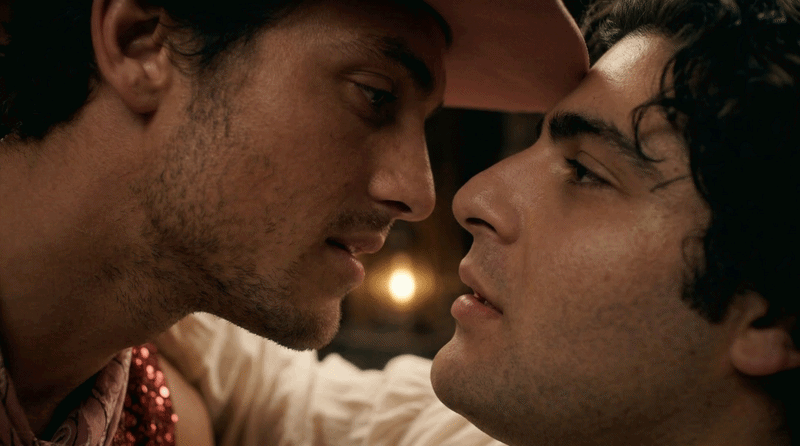
THE MAKING OF DRESSPERADO

An homage, a challenge, and a queer twist on the macho western

When we started creating DRESSPERADO, we were not just trying to make a fun western parody.

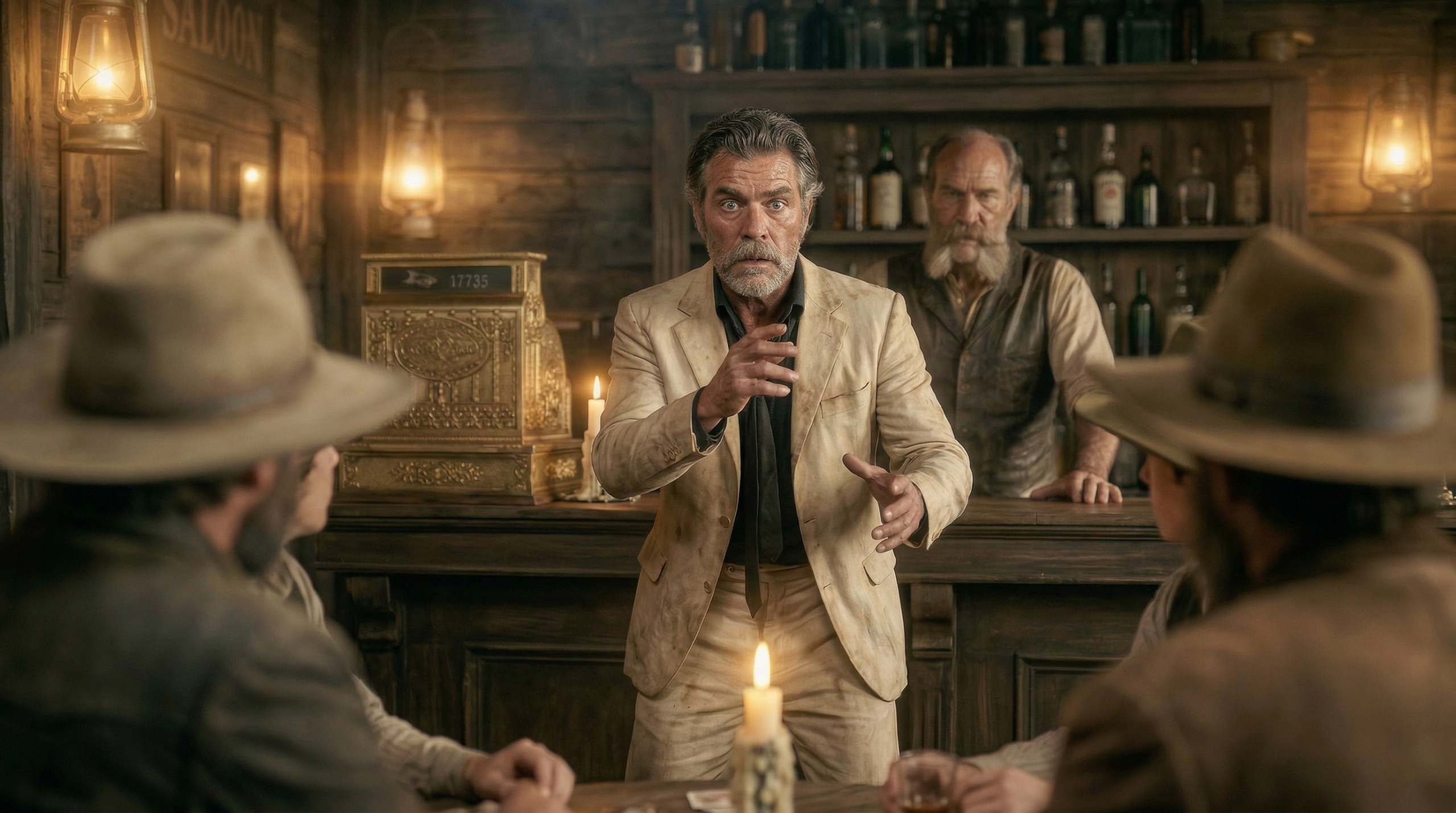
From the beginning, this short film had a very specific spark behind it: the unforgettable opening of Desperado, directed by Robert Rodriguez, in which a storyteller, Steve Buscemi, enters a bar and begins describing, with mythic exaggeration, the arrival of a dangerous legend, Antonio Banderas.

That scene has always felt to us like one of the great lessons in cinematic storytelling. It builds tension, character, atmosphere, humor, and anticipation almost entirely through narration, reaction, and timing.

With DRESSPERADO, we wanted to take that idea as a starting point and use it for several purposes at once.

First, as an homage to one of the best storytelling openings in action cinema.

Second, as a way to push our own filmmaking skills.

And third, as a chance to bring a queer twist into a world that action movies have so often shown as aggressively macho, emotionally repressed, and visually narrow.

That became the heart of the project: to step into that cinematic territory and remake it in our own image.
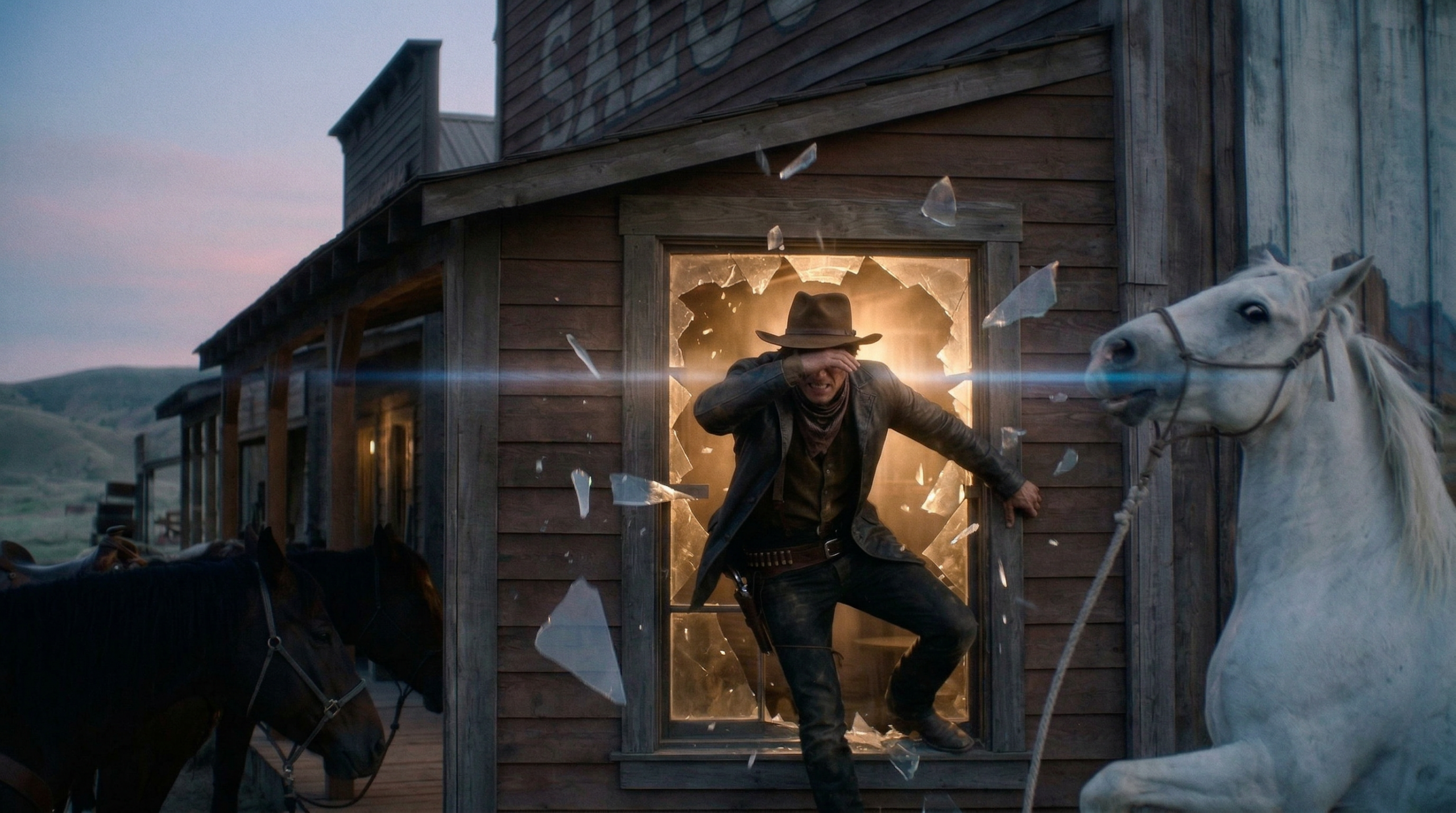
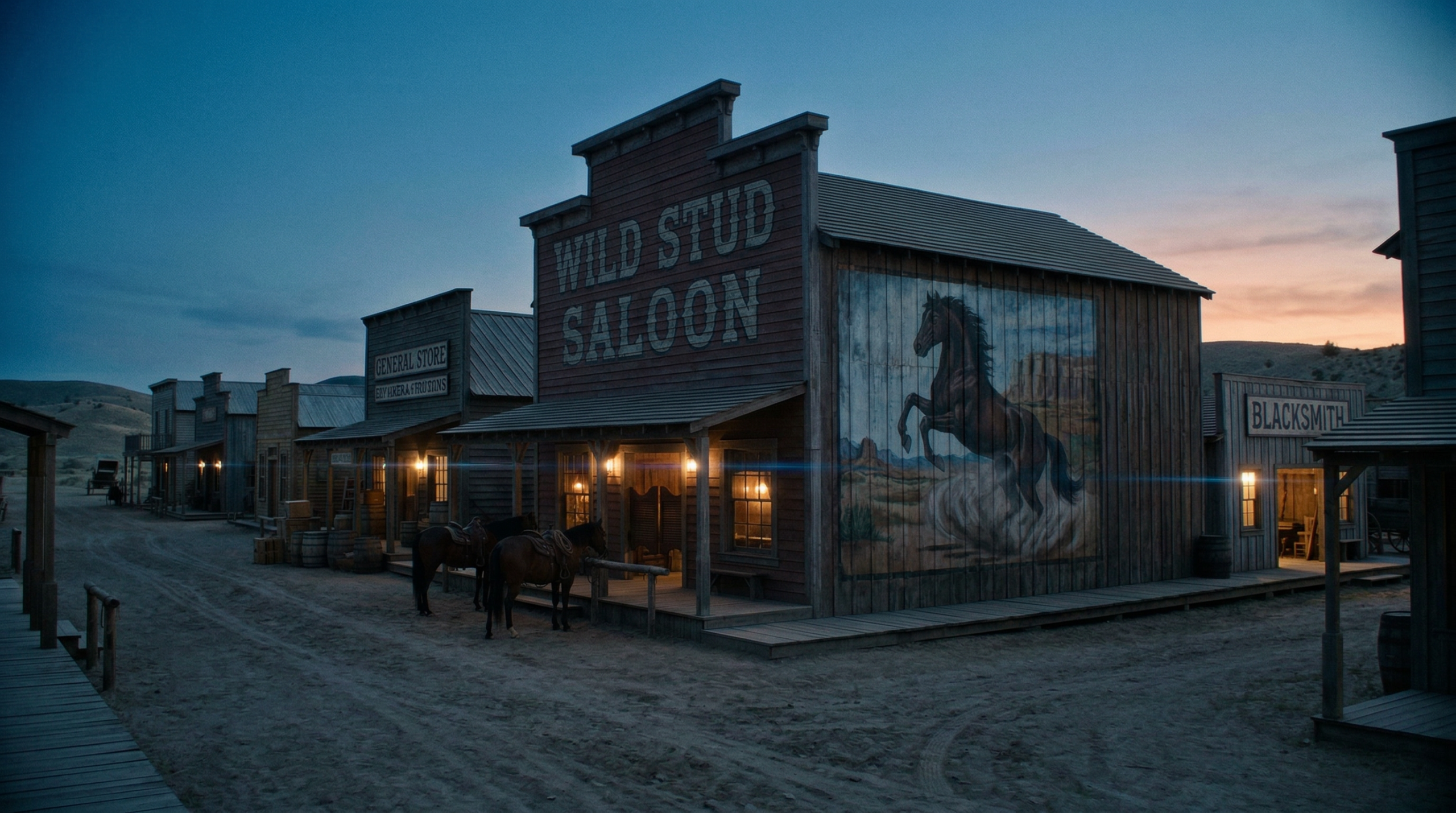
Terror at the Wild Stud
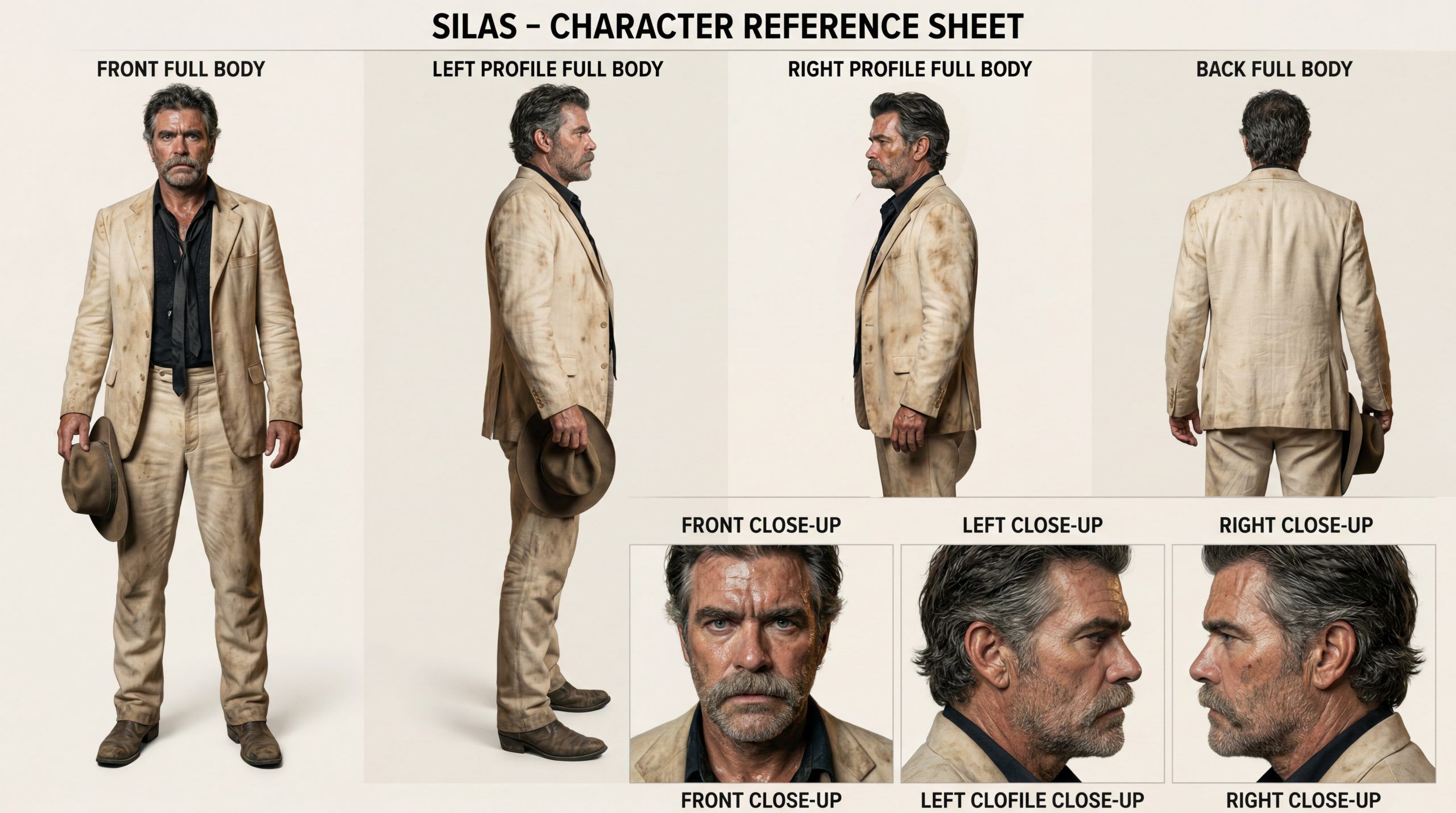
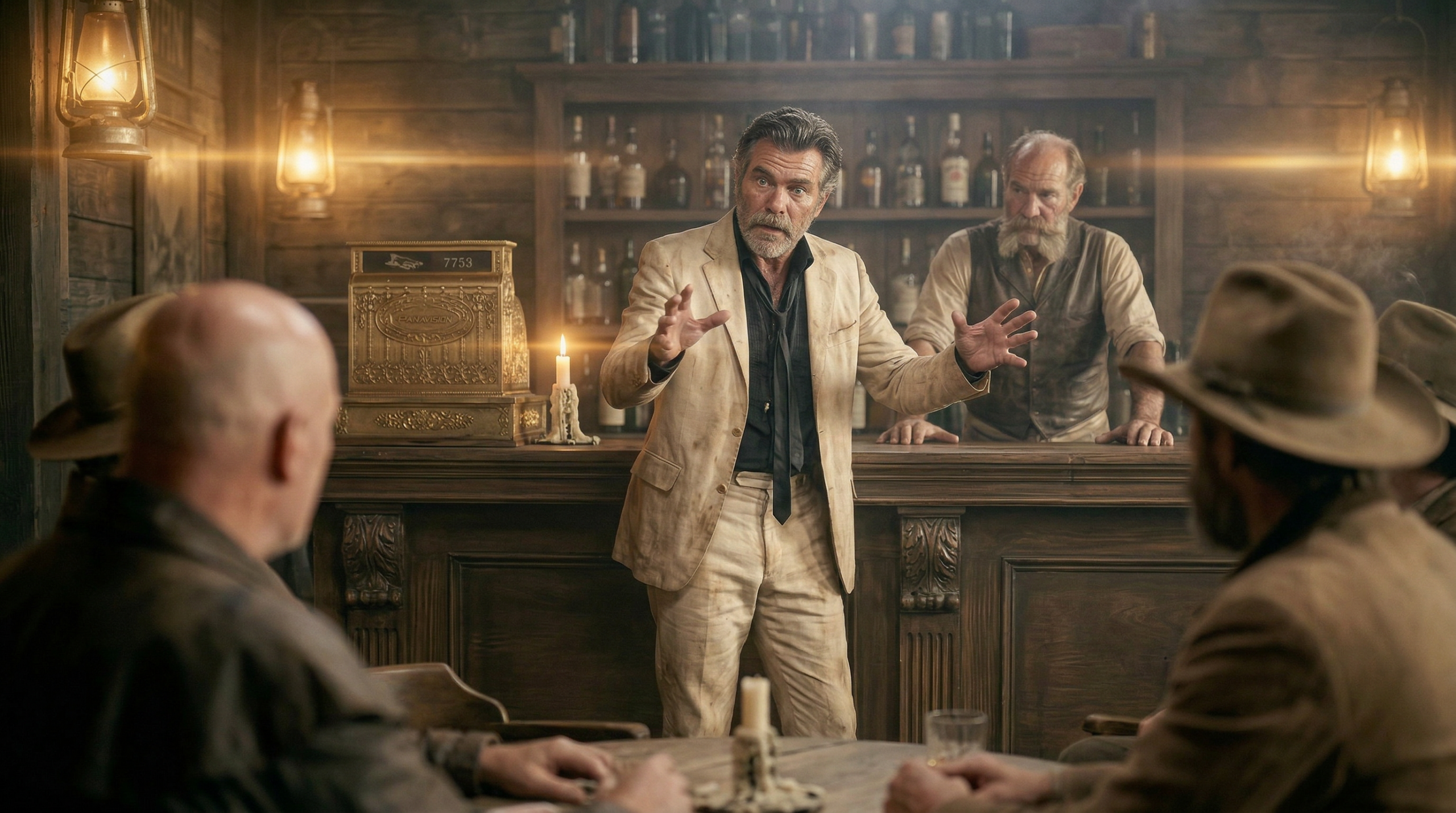
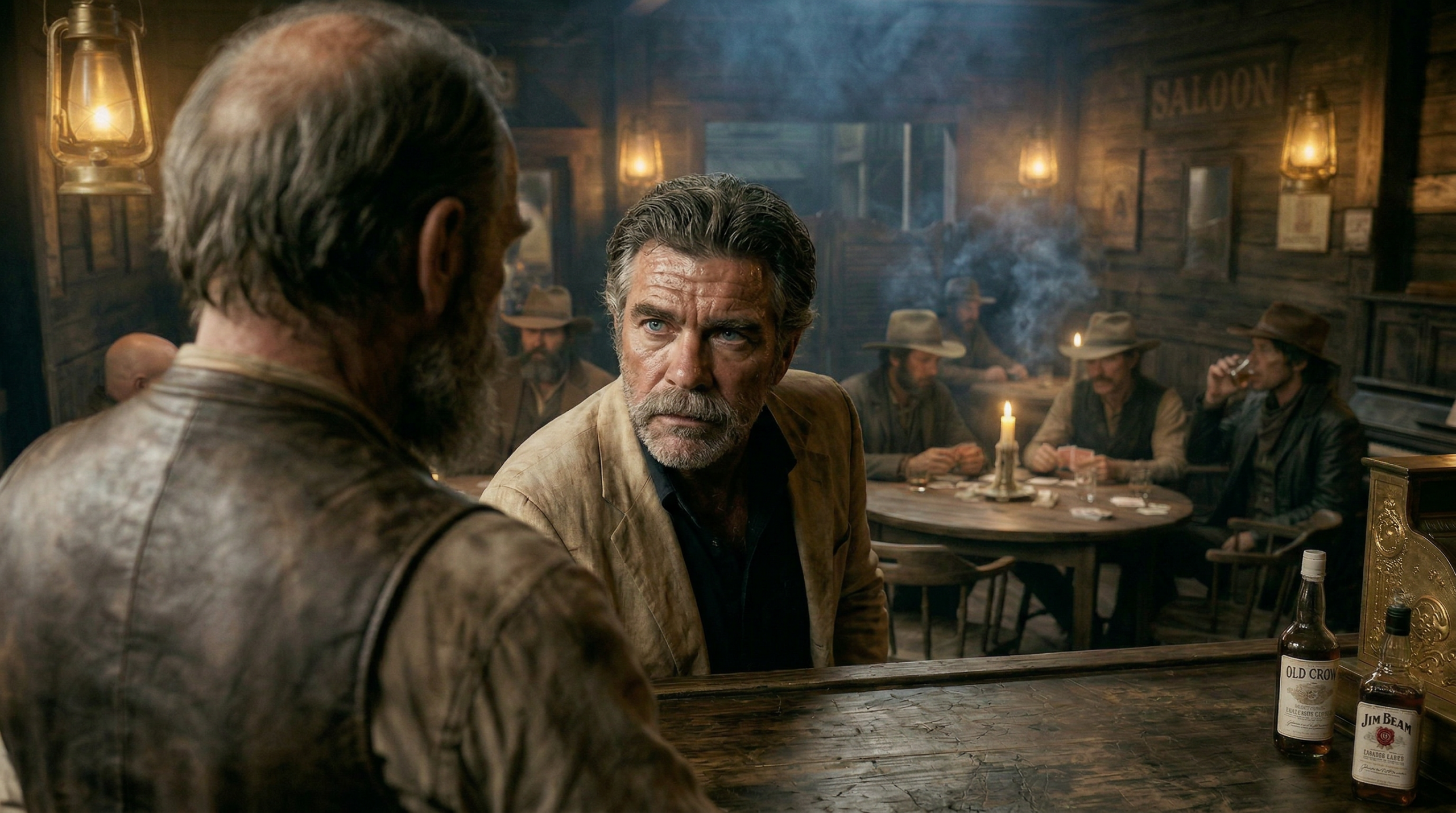
Silas Telling The Fabulous Story of The Stranger

To pay tribute to great cinematic storytelling

We wanted to build our own version of that “story inside a story” energy: a narrator setting up a figure who becomes larger than life before we fully see him for ourselves.
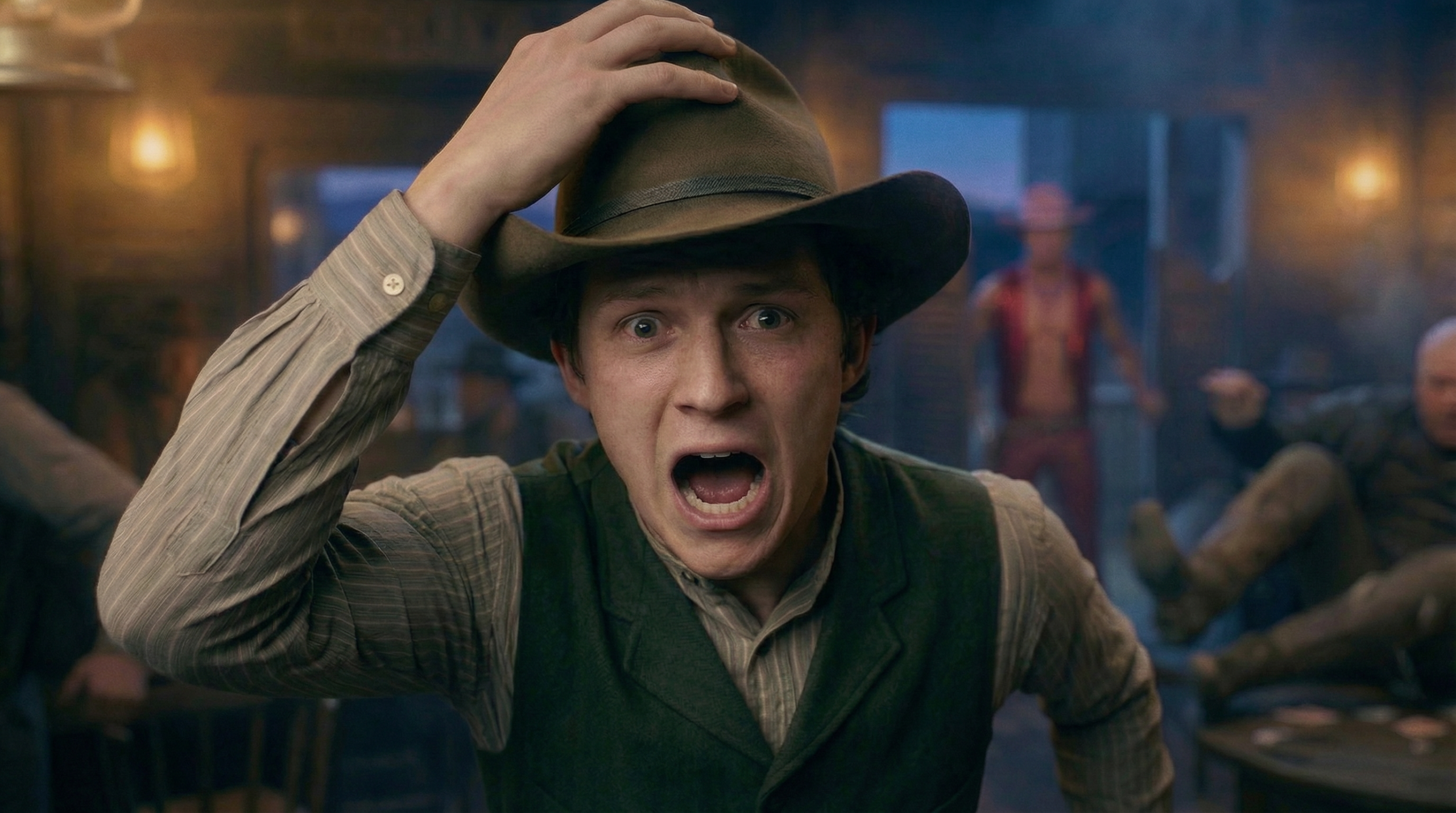
Terror in the Wild Stud

To sharpen our filmmaking craft

Projects like this are also creative training grounds. DRESSPERADO became a way to work on visual continuity, pacing, character consistency, composition, location logic, and the rhythm between storytelling and image.
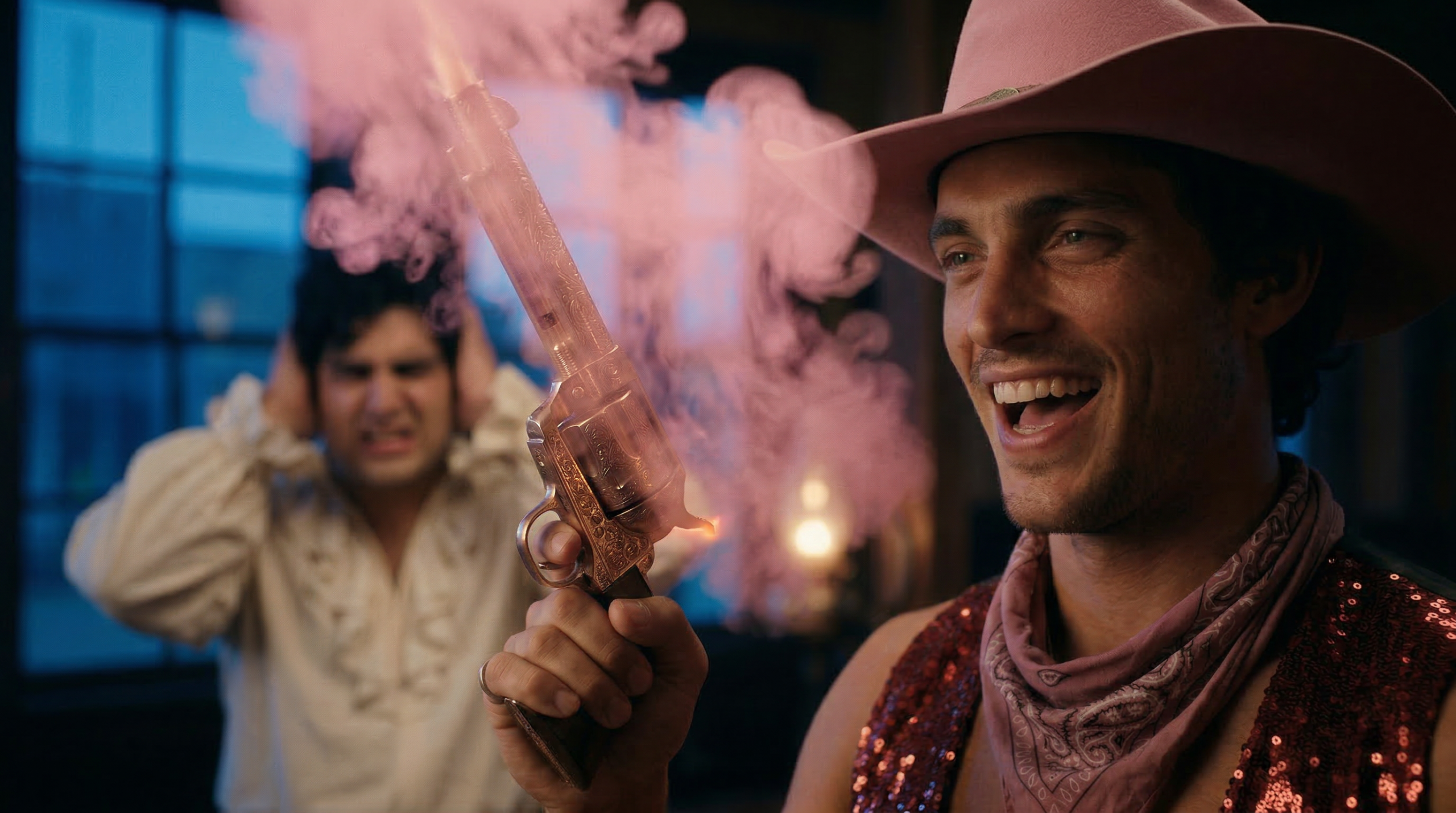
The Flamboyant Gunfire

To queer the macho action world

So much of action cinema has historically centered a very rigid kind of masculinity. We wanted to step inside that frame and bend it. Not to mock cinema, but to expand it.

We wanted to pay tribute to one of the greatest storytelling openings in action cinema, sharpen our filmmaking craft, and bring a queer twist to a world movies have too often imagined as only macho.

Writing the script

A Story inside a Story.

The screenplay began not with plot, but with tone and framing.

We knew we wanted:

    • A storyteller figure.
    • A saloon audience.
    • The feeling of legend spreading through a hostile room.
    • A central figure whose very existence unsettles that world.
    • Comedy, but with craft.
    • Exaggeration, but with control.

That meant the script had to work on two levels at once.

On one level, it had to be entertaining and heightened, with strong visual beats and memorable lines.

On another, it had to function as a real piece of cinematic storytelling: a carefully staged introduction to a world, a set of characters, and a hero whose image arrives before his full story does.

Because of that, the writing process was never just about dialogue. It was also about rhythm, scene escalation, and visual imagination.

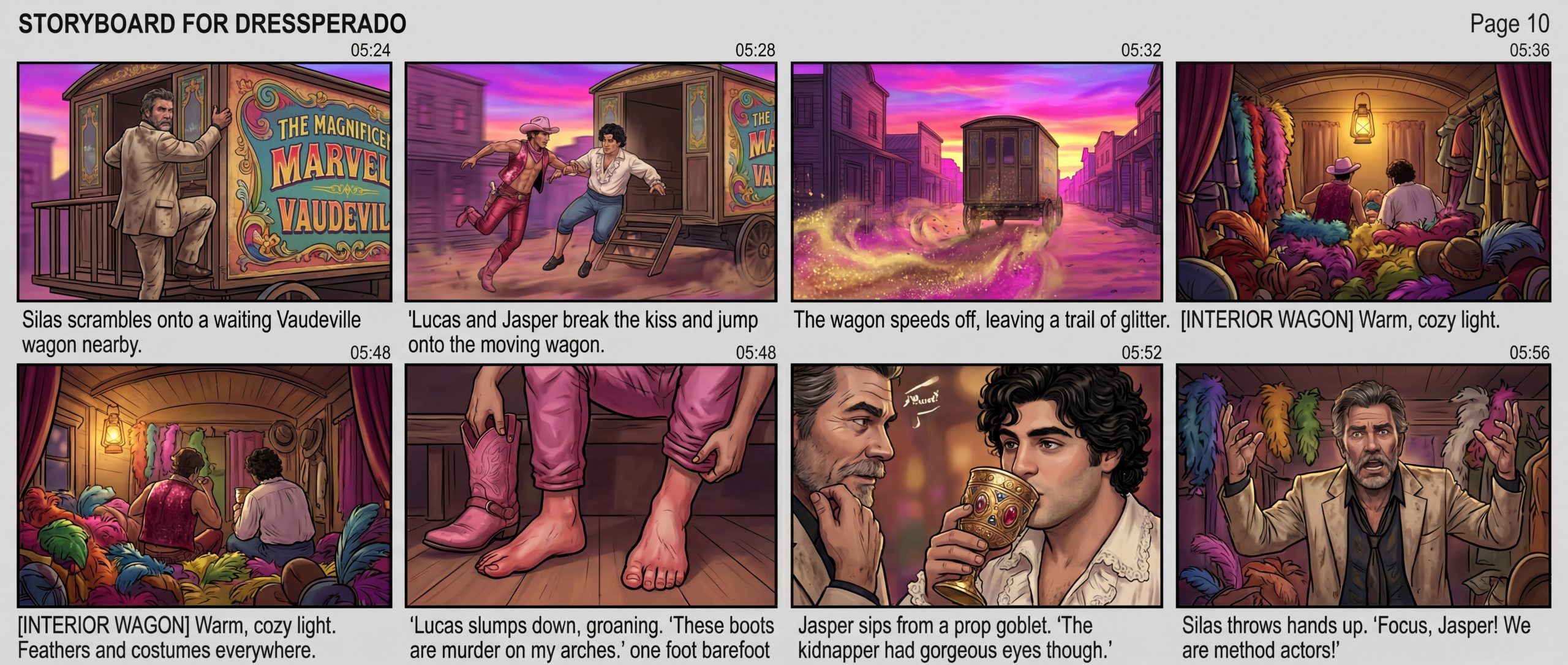
Storyboarding as production acceleration
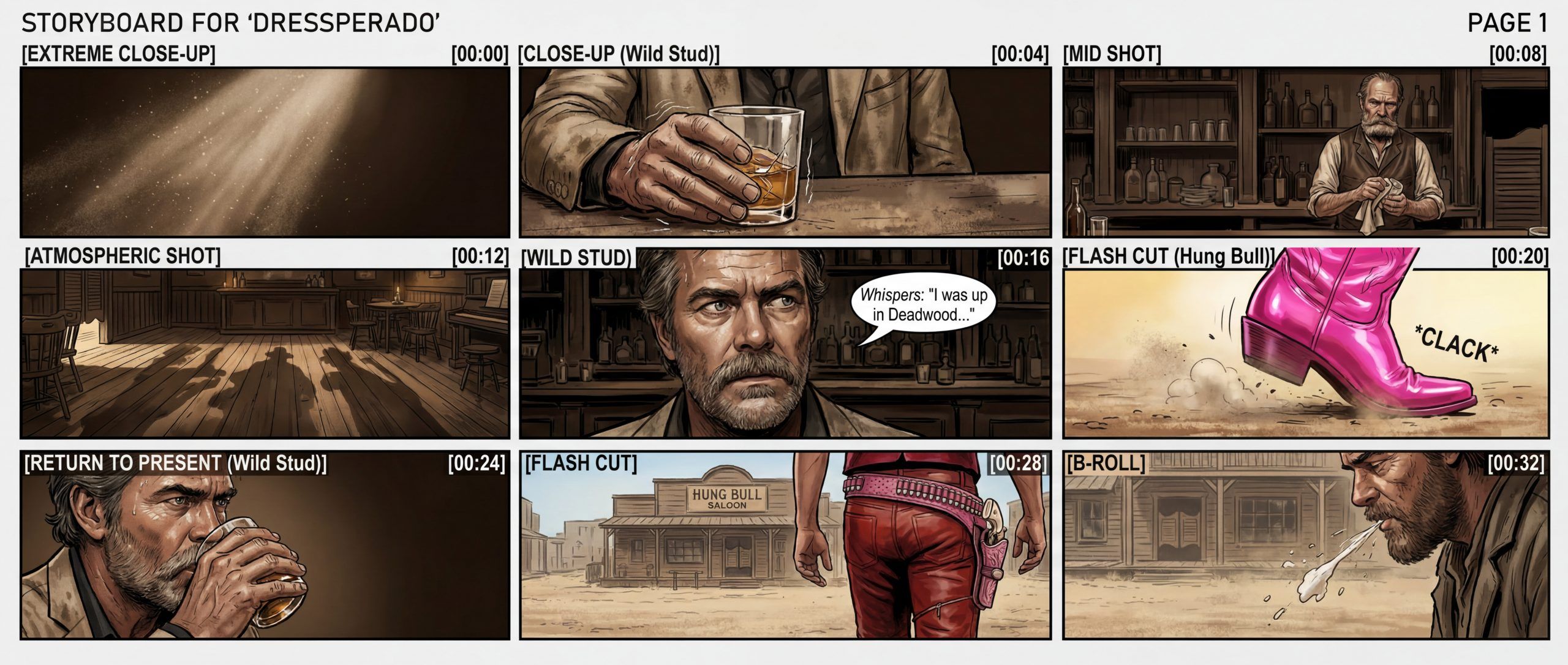
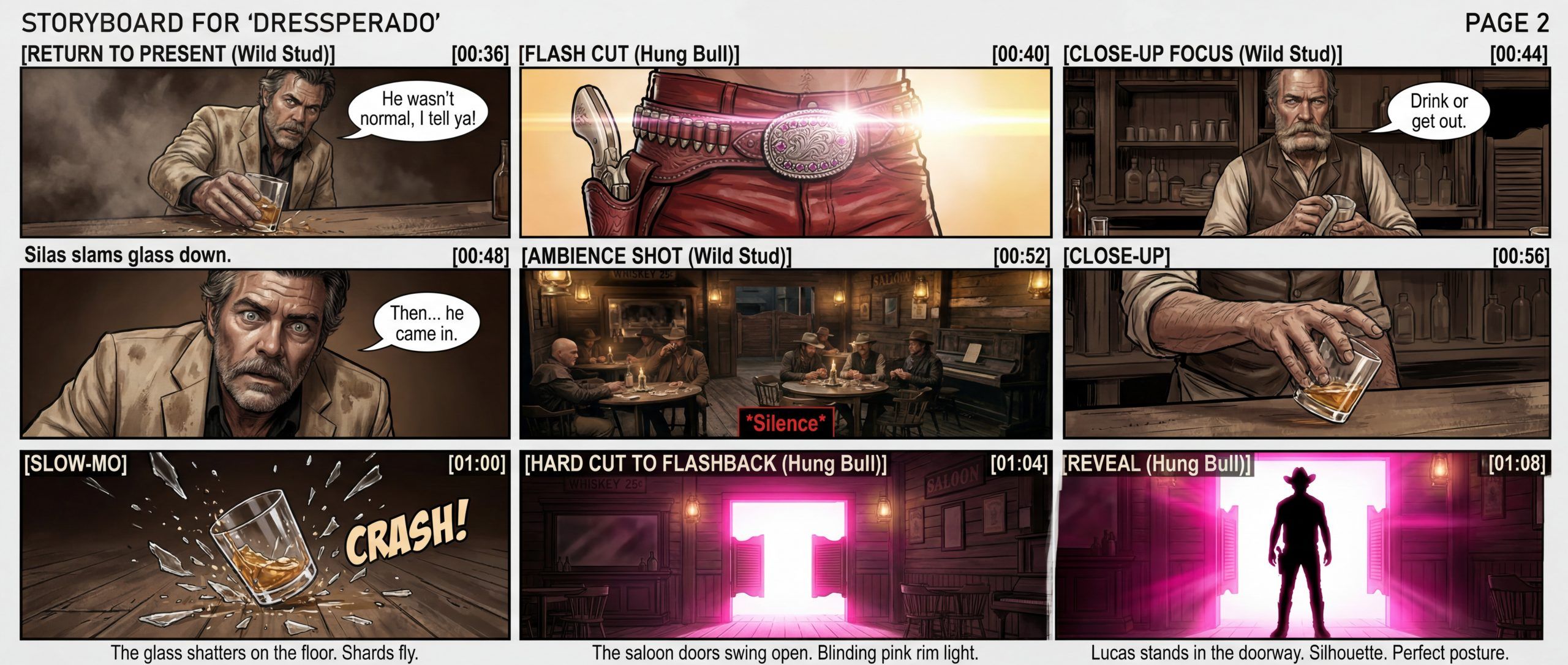
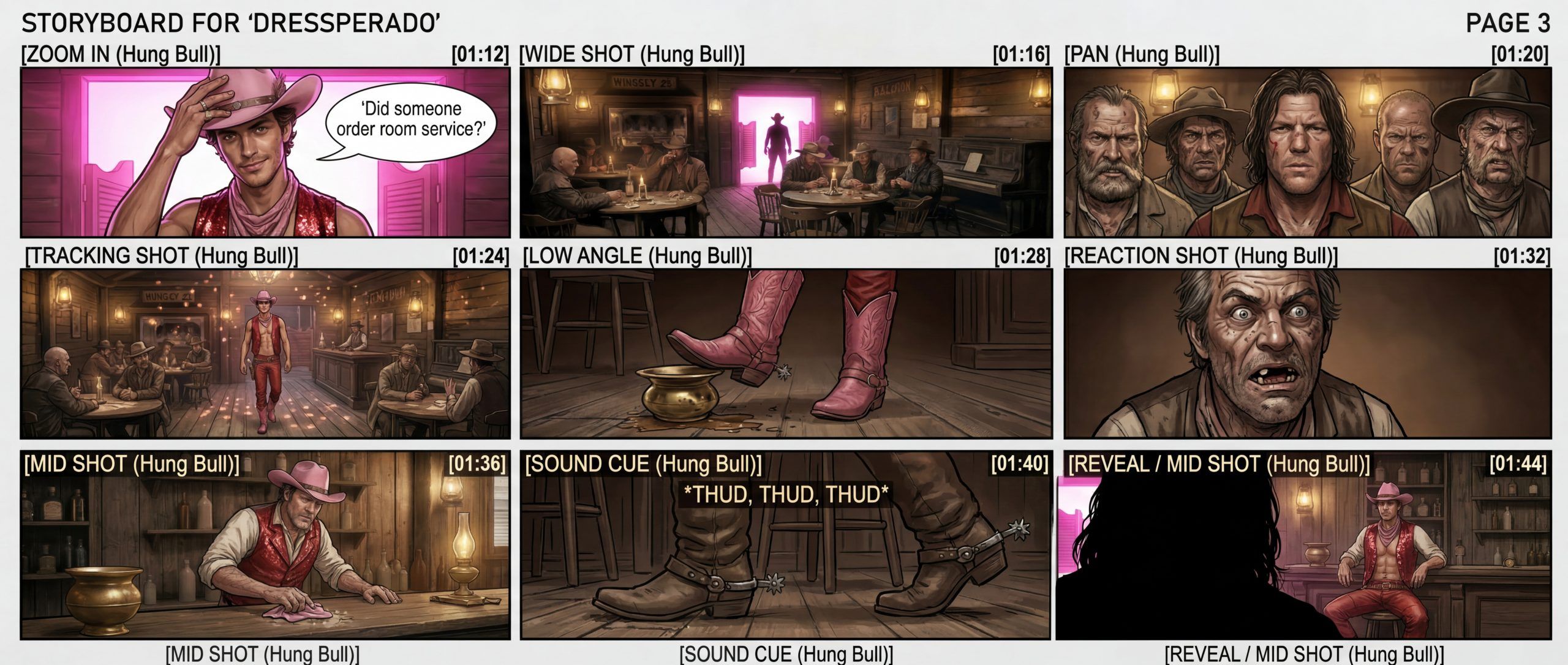
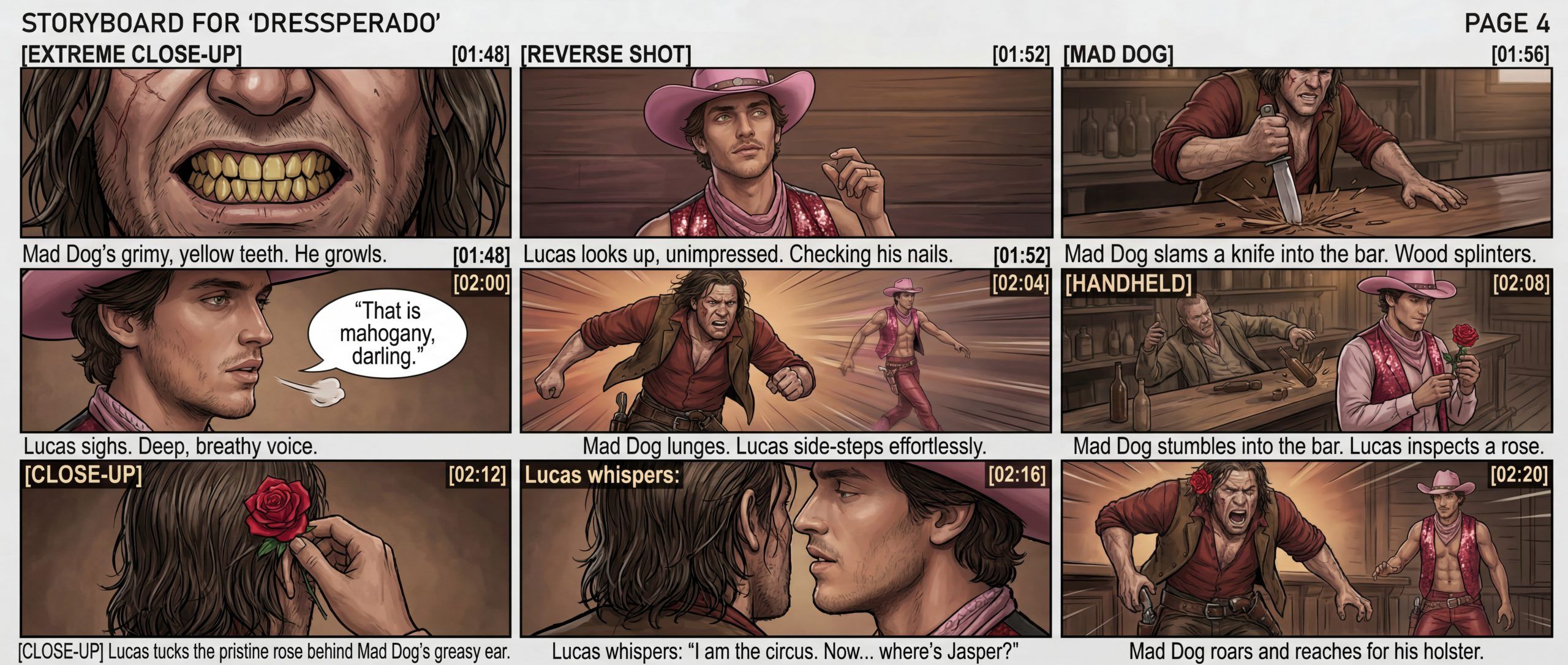
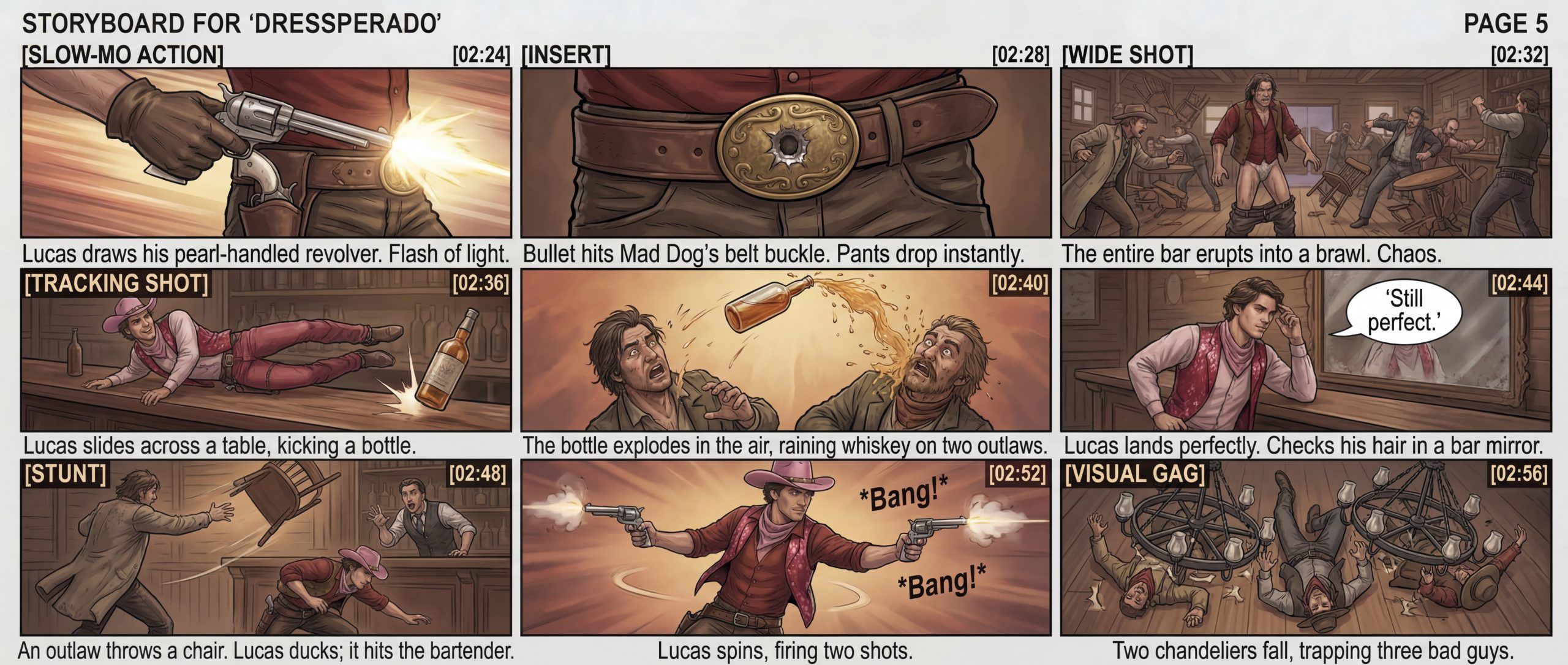
One of the biggest changes in our workflow has been the way we now use storyboards.

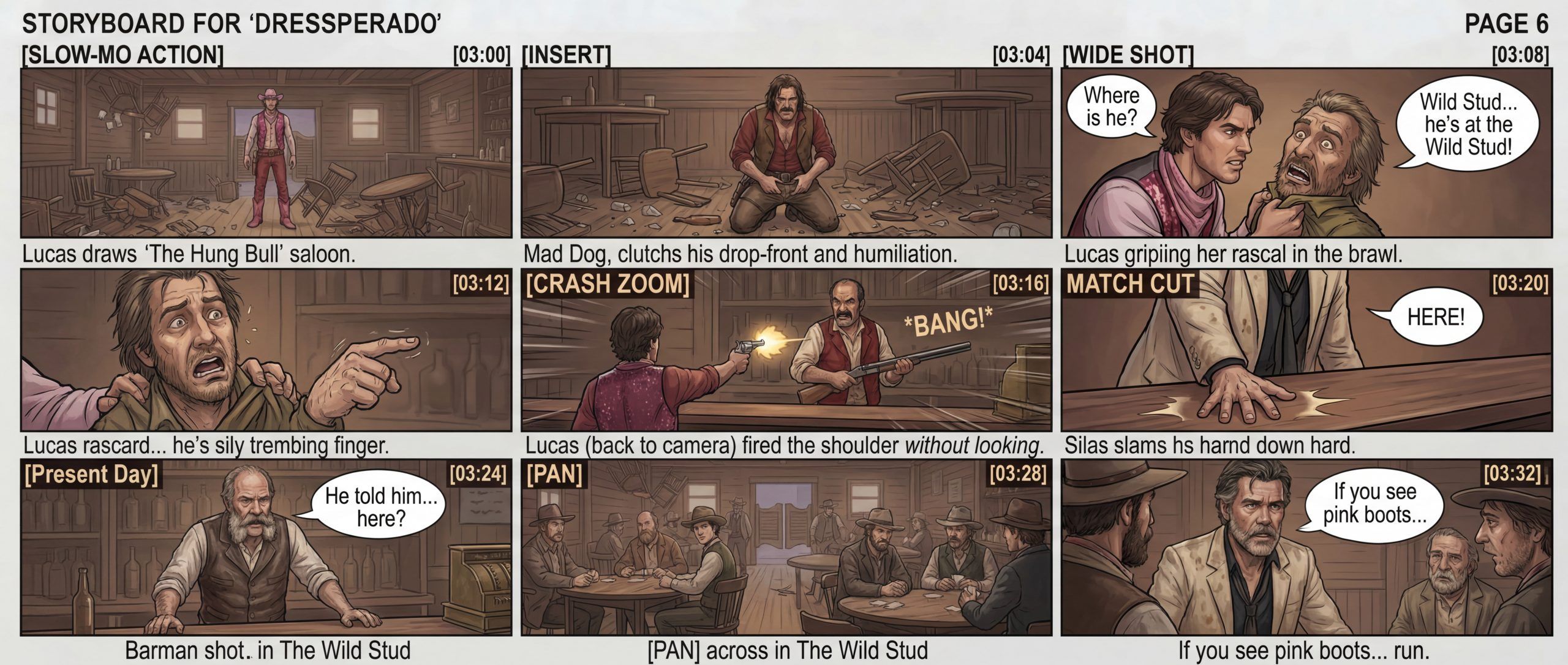
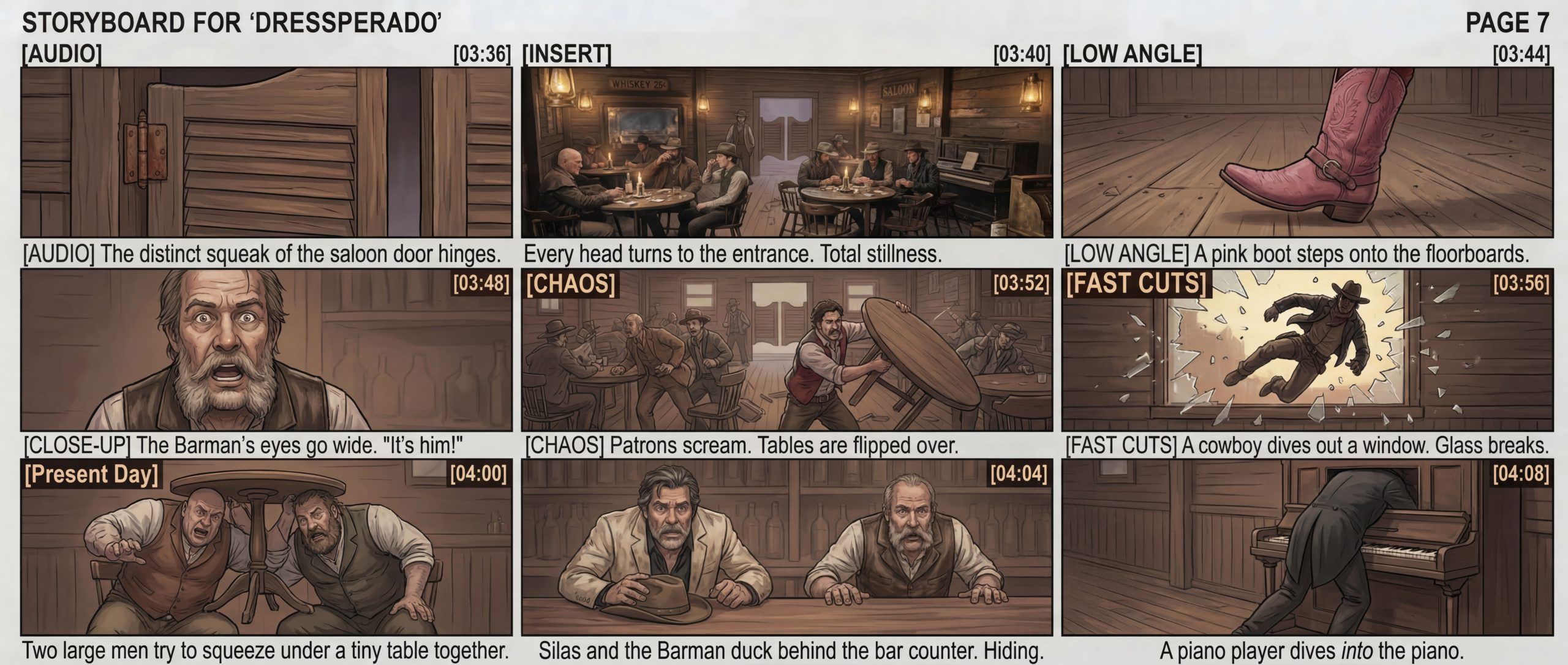
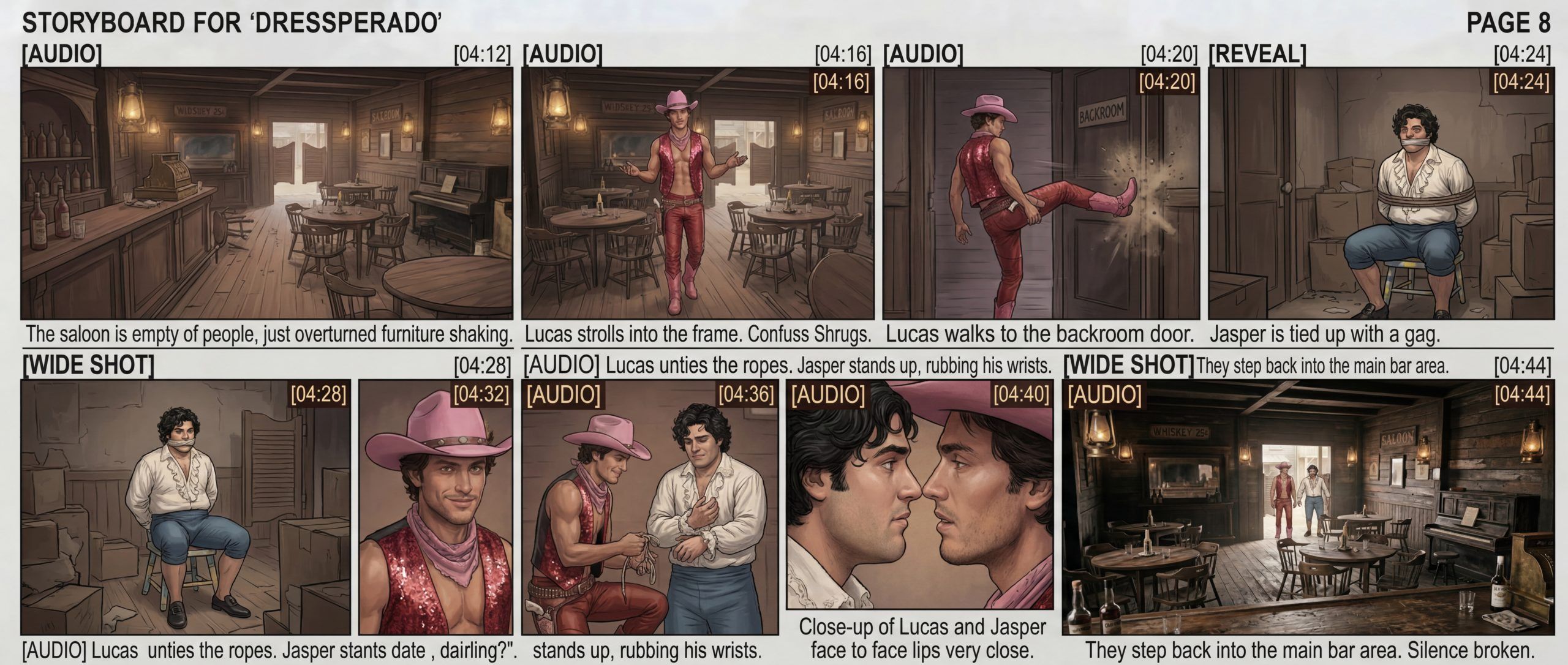
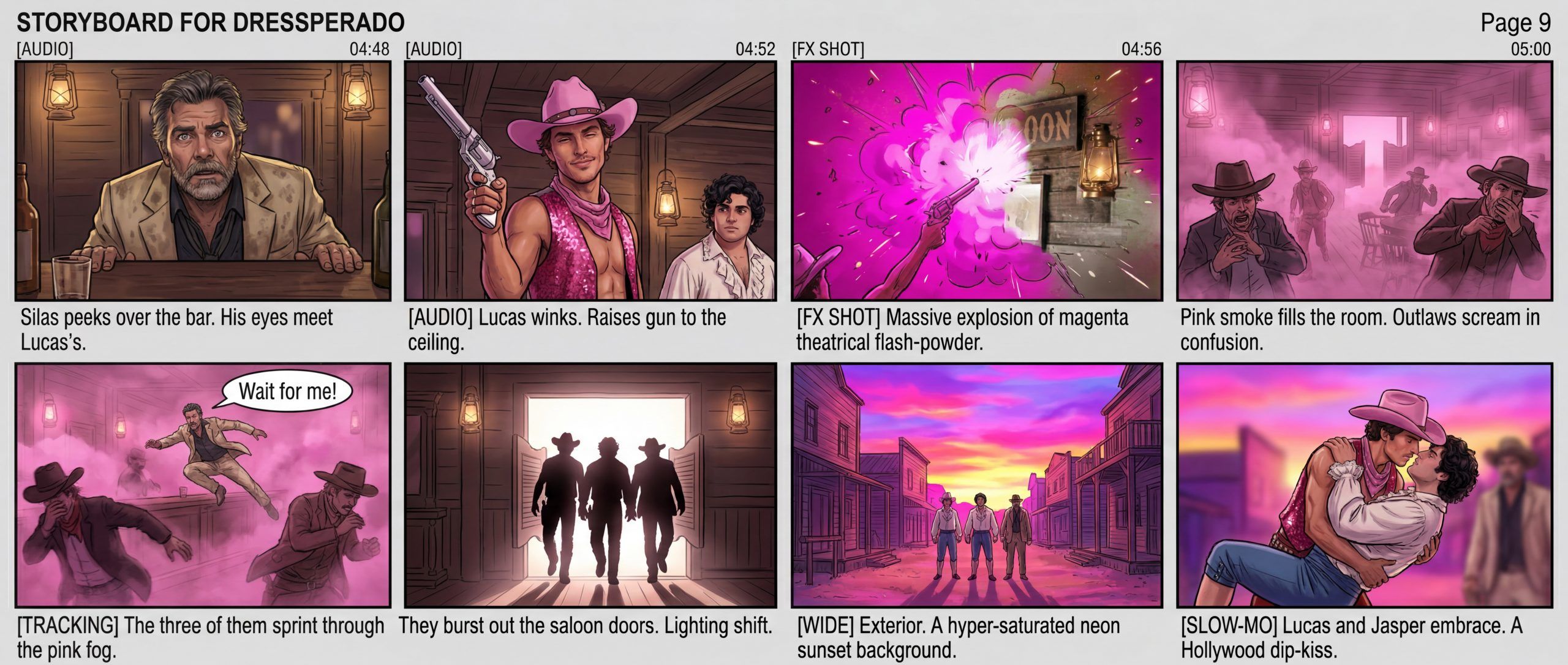
For DRESSPERADO, the storyboard was not just a visual summary of the film. It was also a practical shot-planning tool, tightly connected to the way we build projects from script to image to motion.

Because we are using our own app to create timelines, we can think about scenes in a much more structured way from the very beginning. Instead of treating storyboards as something decorative or optional, we use them as an active production layer: a way to map timing, define shot logic, test rhythm, and make sure every clip has a clear function before we move into generation.

That has changed everything.
 used not only for visual planning but also as shot design, pacing control, and timeline construction inside our in-house workflow
Creating specific storyboards that also work as shot planning has multiplied the speed at which we can put out projects, while making the overall workflow much smoother. It helps us see very early whether a sequence is clear, whether the escalation works, whether the cuts make sense, and whether the scene is asking for the right kind of image generation.

In practical terms, it means fewer blind experiments later on.
We can identify missing shots sooner. We can see where a scene needs an insert, a reaction, a wider frame, or a stronger reveal. And because the timeline logic is already present, the jump from concept to execution becomes much more fluid.

For a project like DRESSPERADO, that was especially useful, because the opening depends so heavily on pacing, contrast, reaction shots, and the gradual construction of myth. The storyboard let us design that sequence with much more control.
It also helped us keep the tone balanced. This film moves between homage, parody, tension, glamour, and action. The storyboard allowed us to test how those energies were flowing before committing fully to each clip.

In that sense, the storyboard became much more than previsualization.

It became part of the engine of production.
Another reason the storyboard has become so important for us is that it creates a cleaner bridge between planning and AI generation.

Once the shots are defined visually, the process of building the actual clips becomes much more efficient. We are no longer trying to invent the sequence while generating it. We are generating toward a clearly planned result.

That makes decisions faster.

It also improves consistency, because the storyboard helps preserve intent across the whole chain: script, shot, composition, motion, edit.

For us, that has become one of the keys to working faster without losing cinematic control.

Designing the characters

Once the tone was clear, we moved into character development.


For a film like this, character design is not secondary. It is narrative.


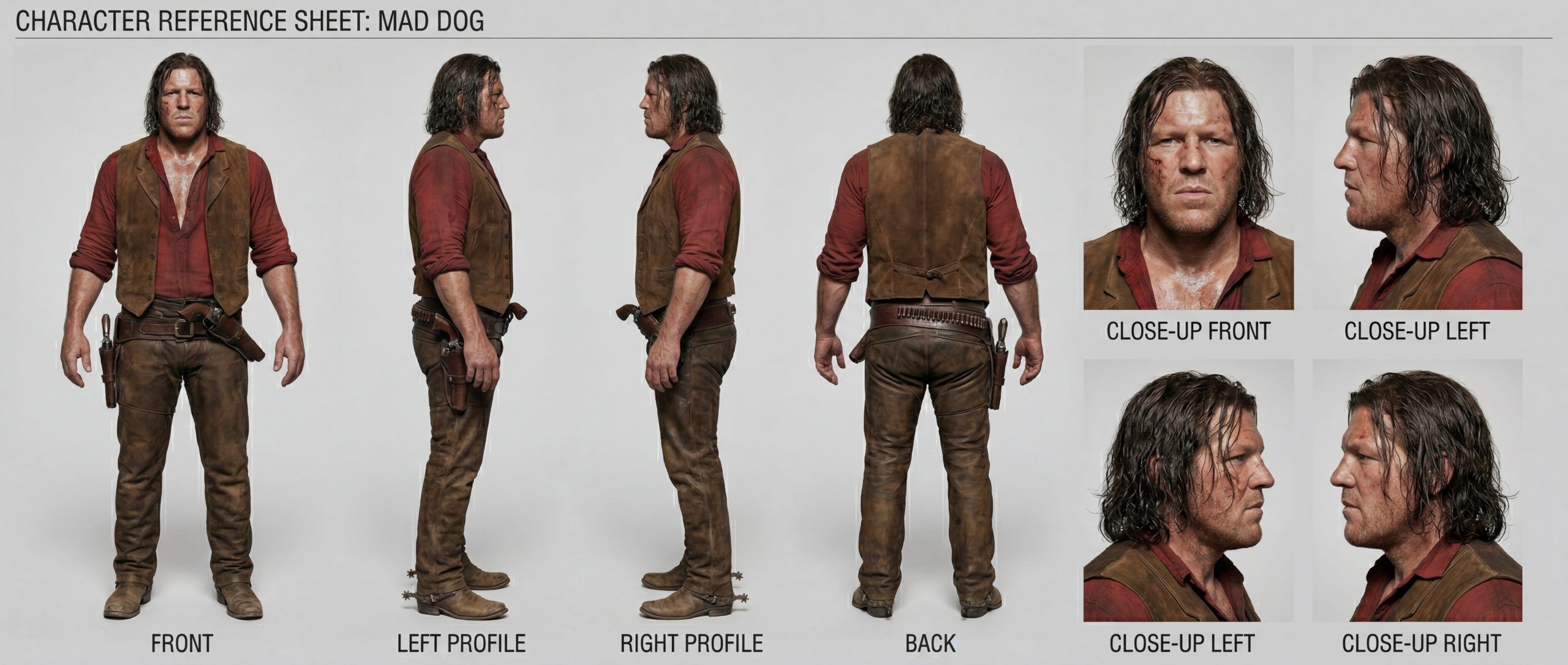
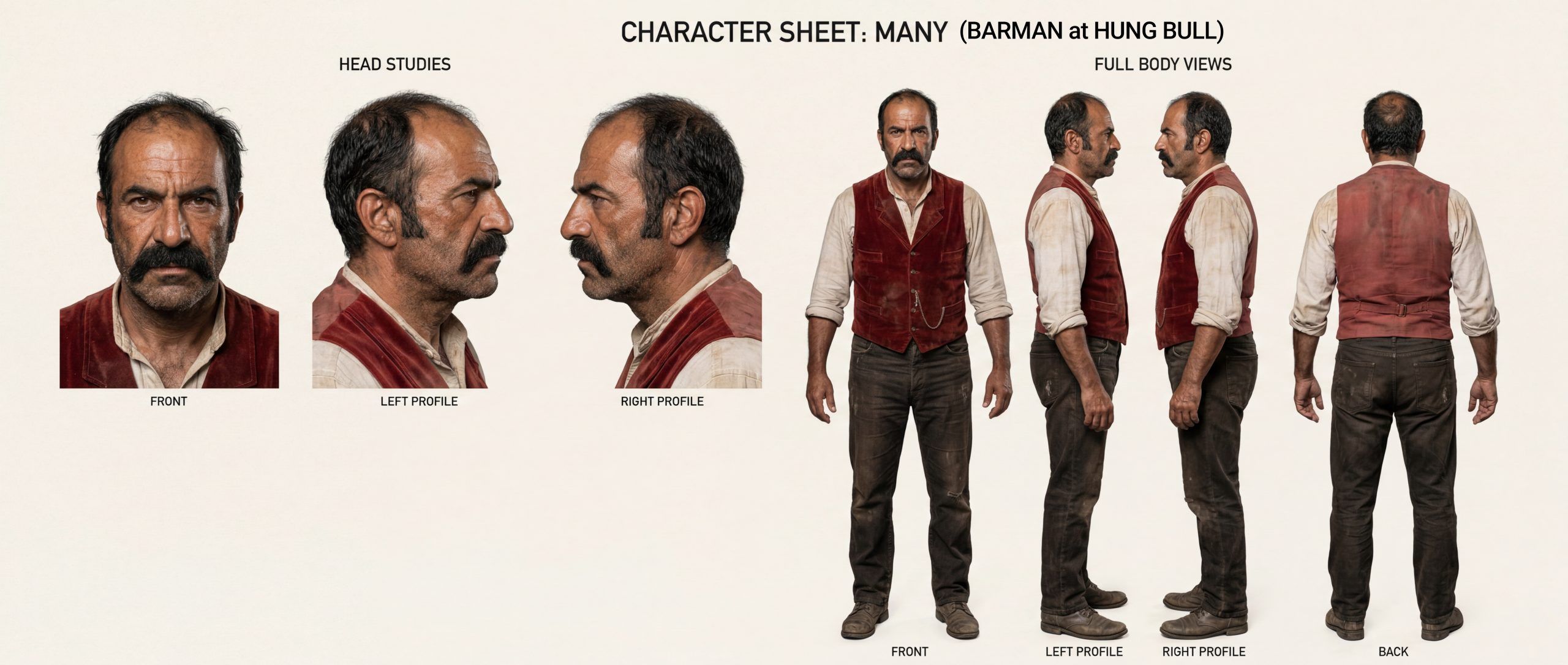
Each person needed to be readable at a glance, almost like they were stepping out of a myth or a story being told around whiskey glasses and candlelight. That meant building them through silhouette, posture, costume, age, texture, and emotional function.

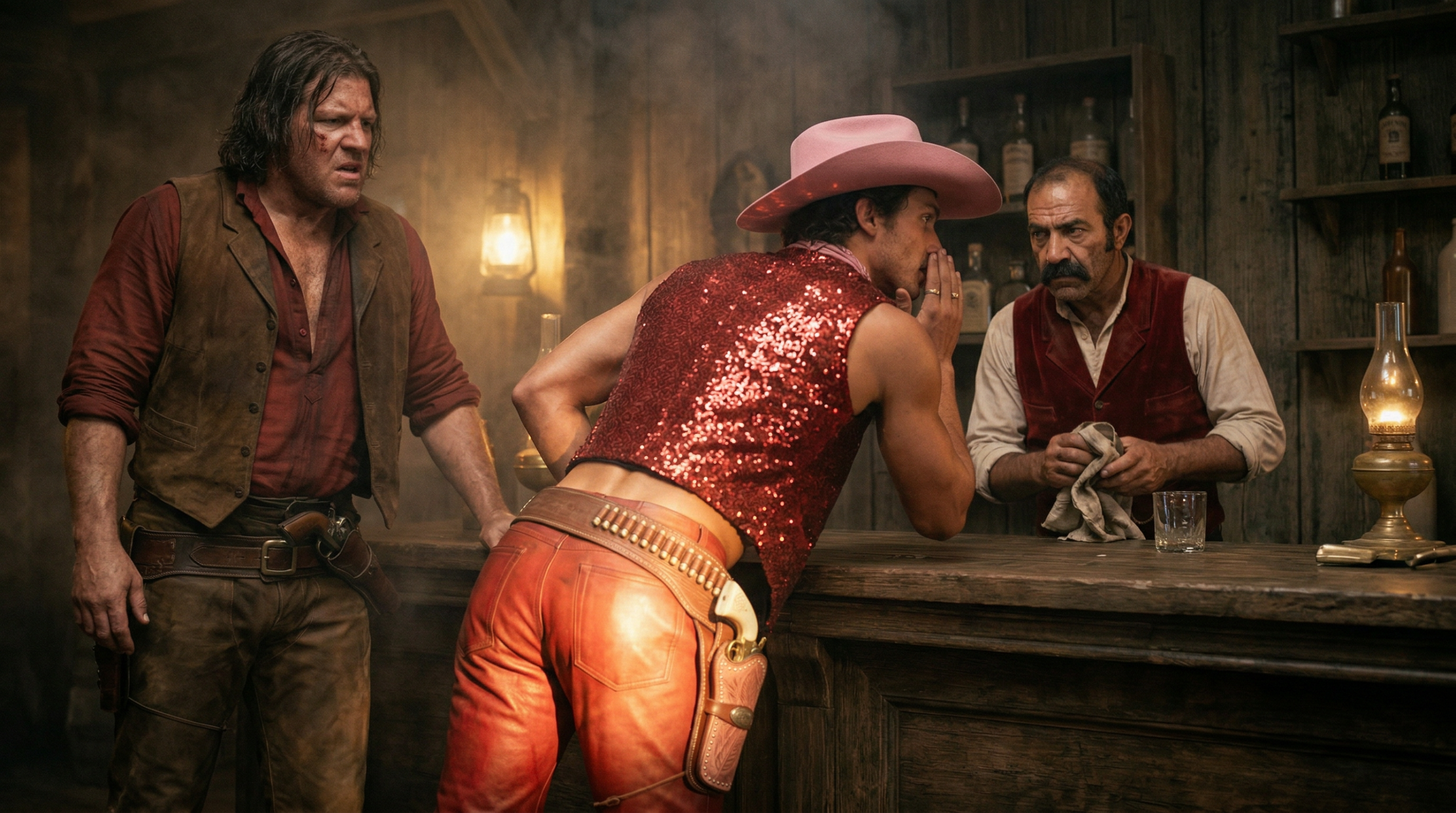
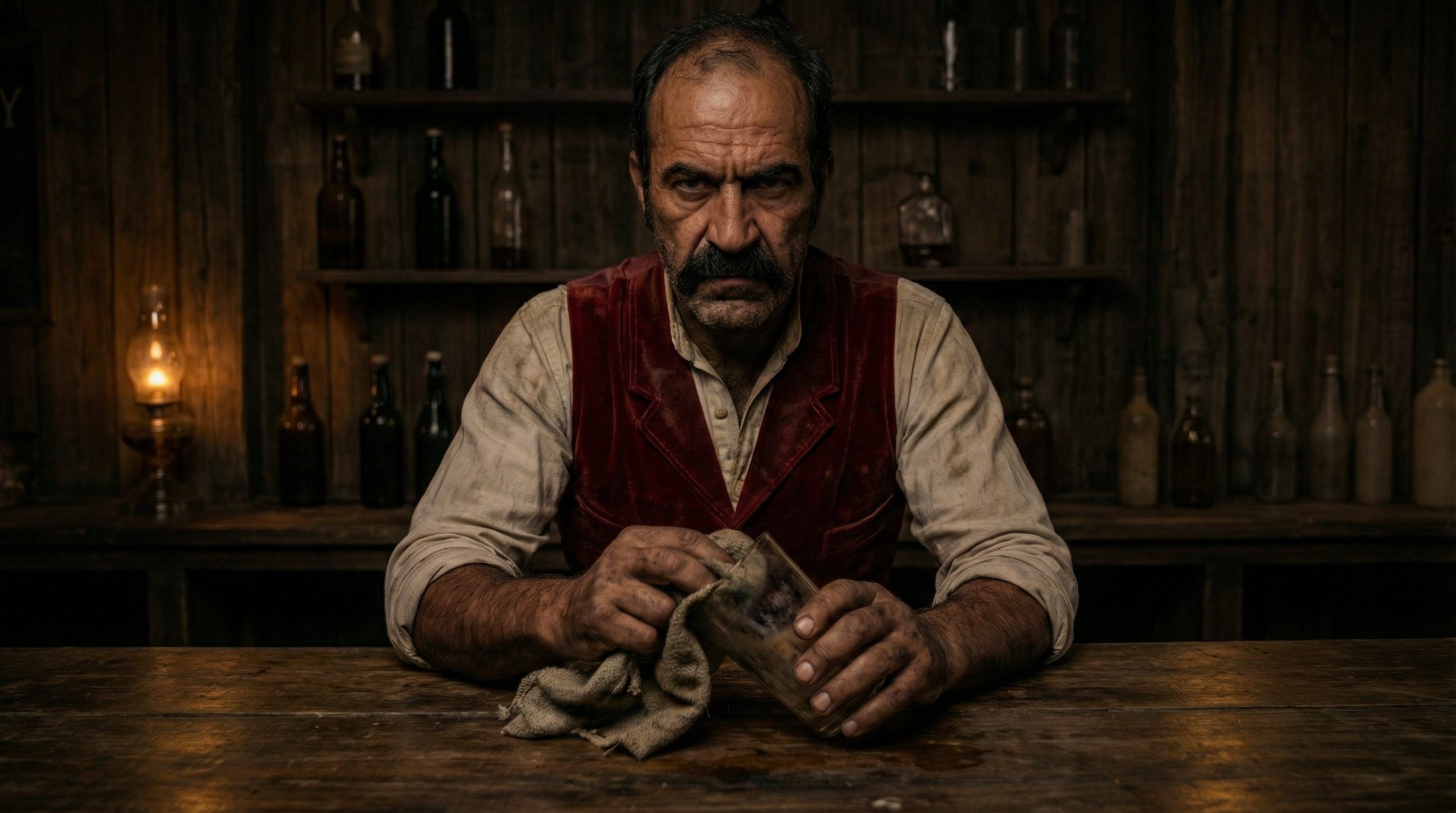
The barman, for example, had to feel like a man who had seen everything and survived long enough to stop being surprised by most of it.
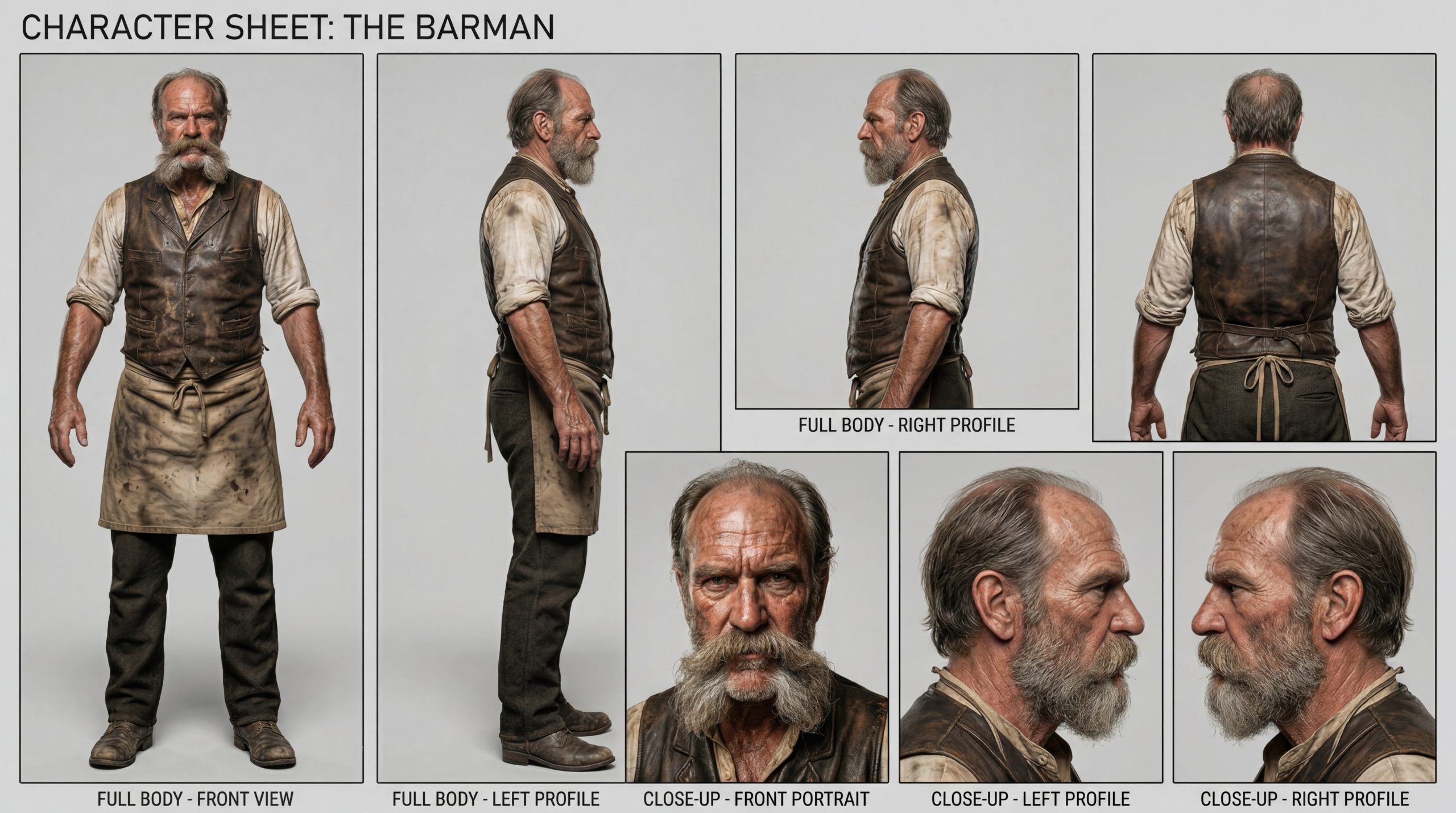
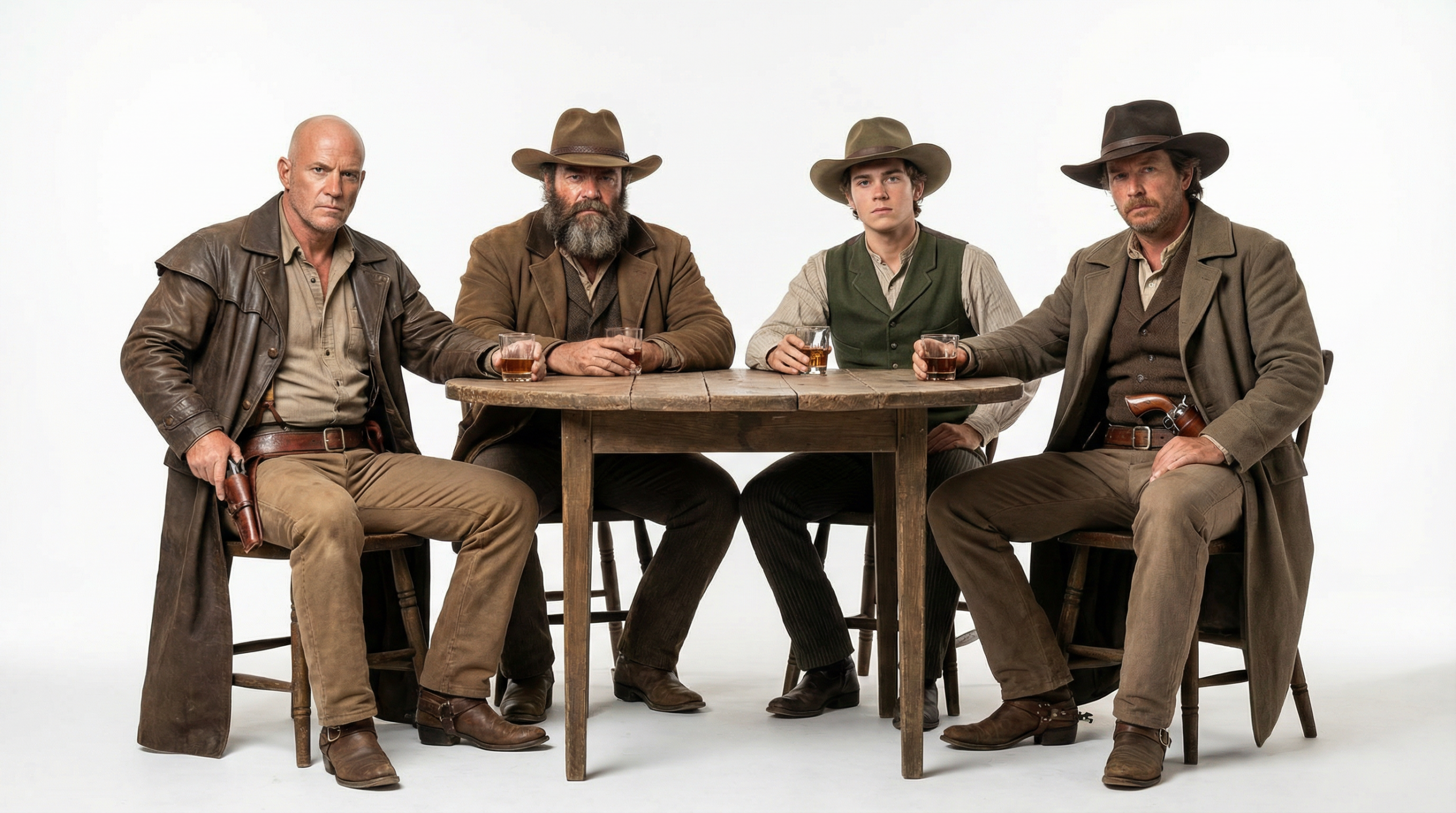
The Barman - Character Sheet
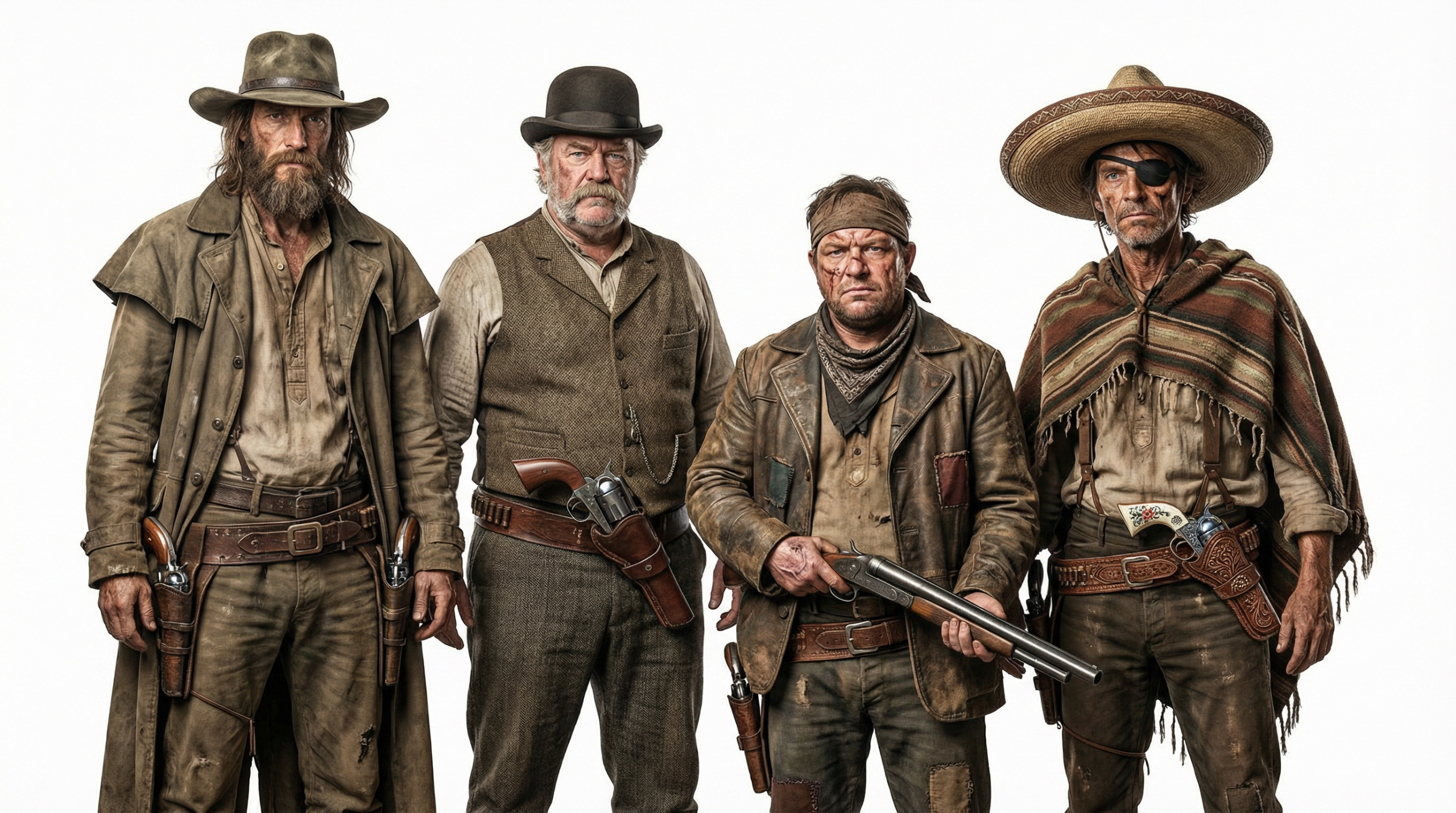
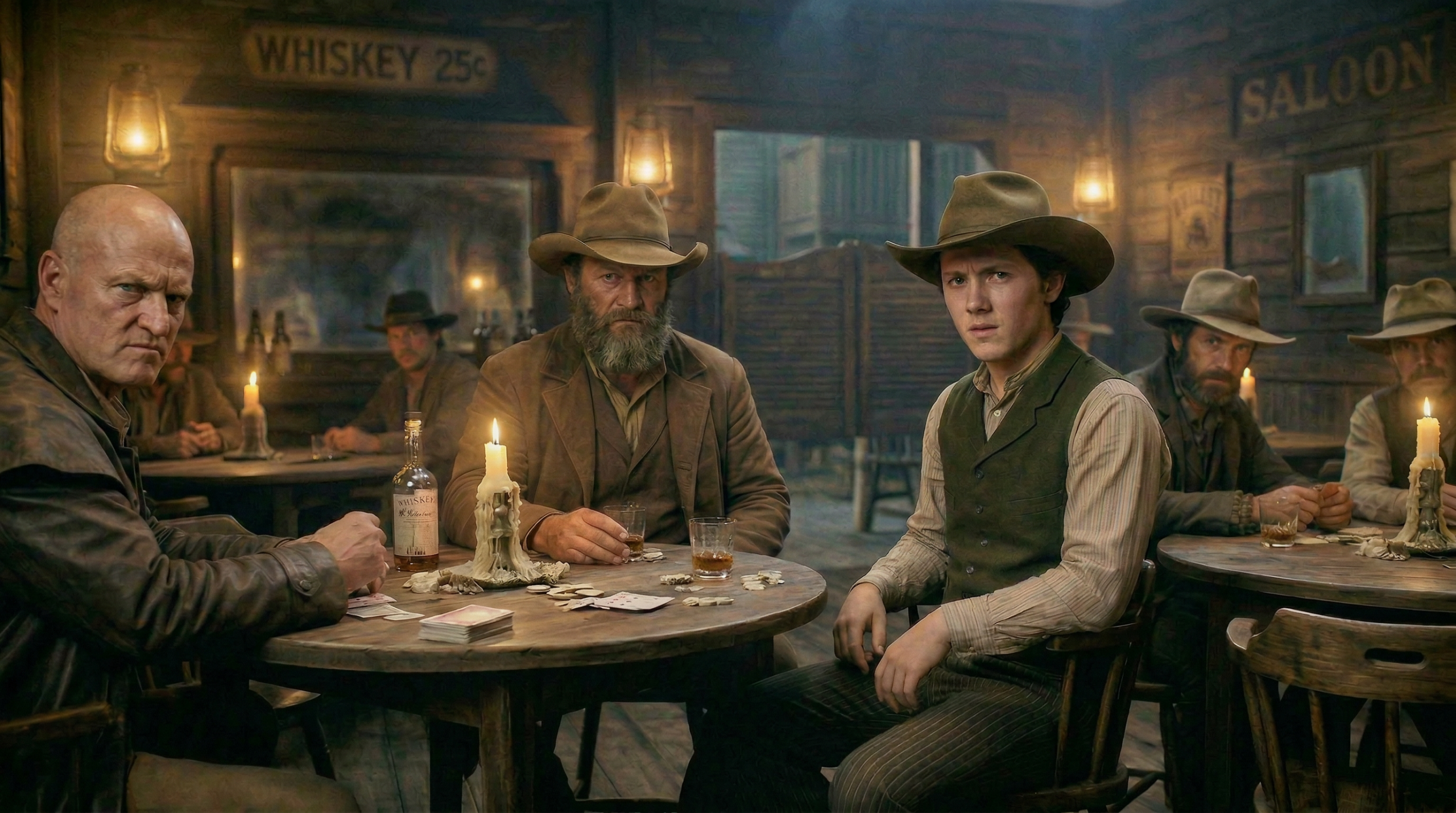
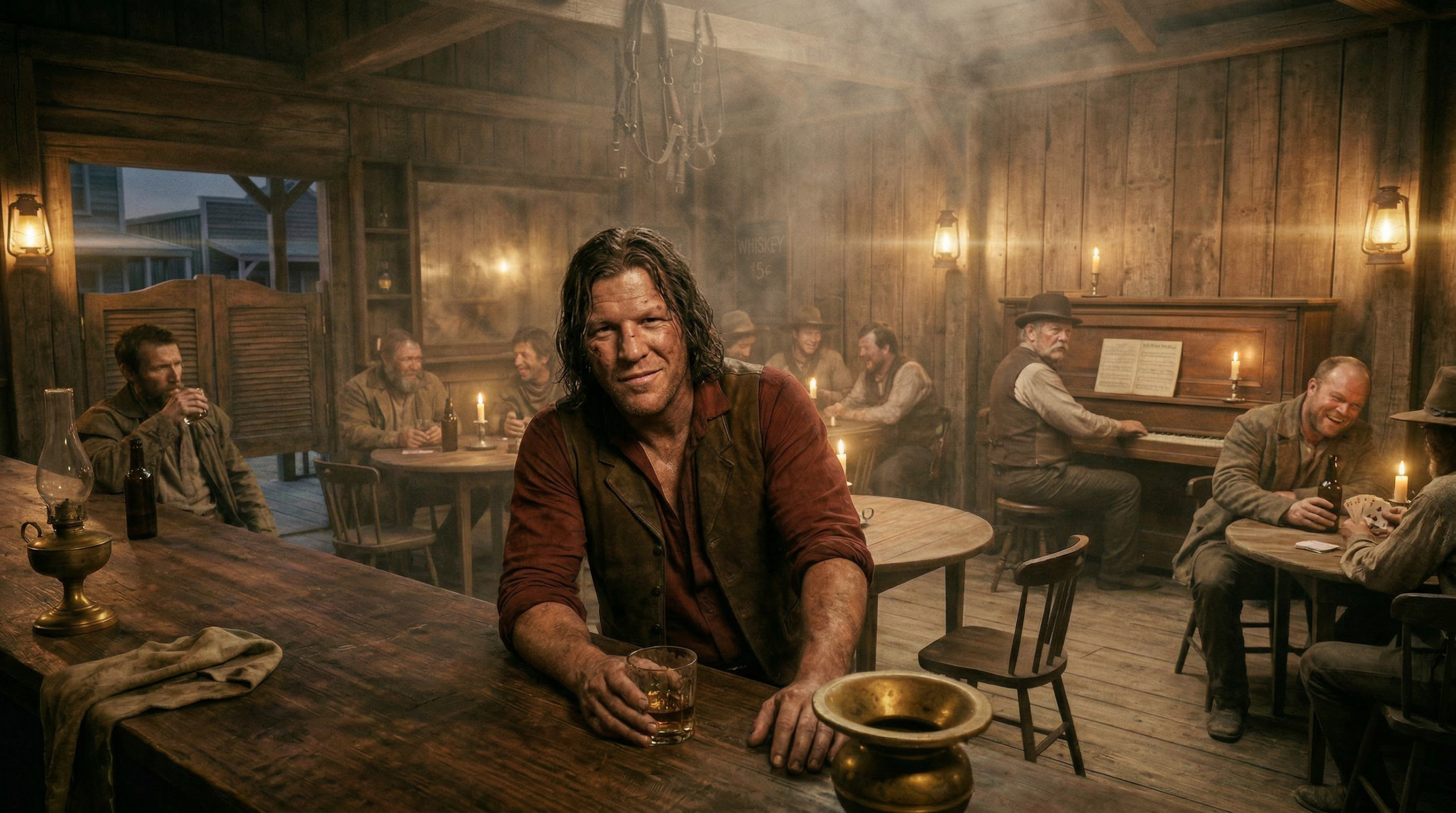
The violent men in the room needed to look weathered, dangerous, and rooted in the dusty realism of the western.
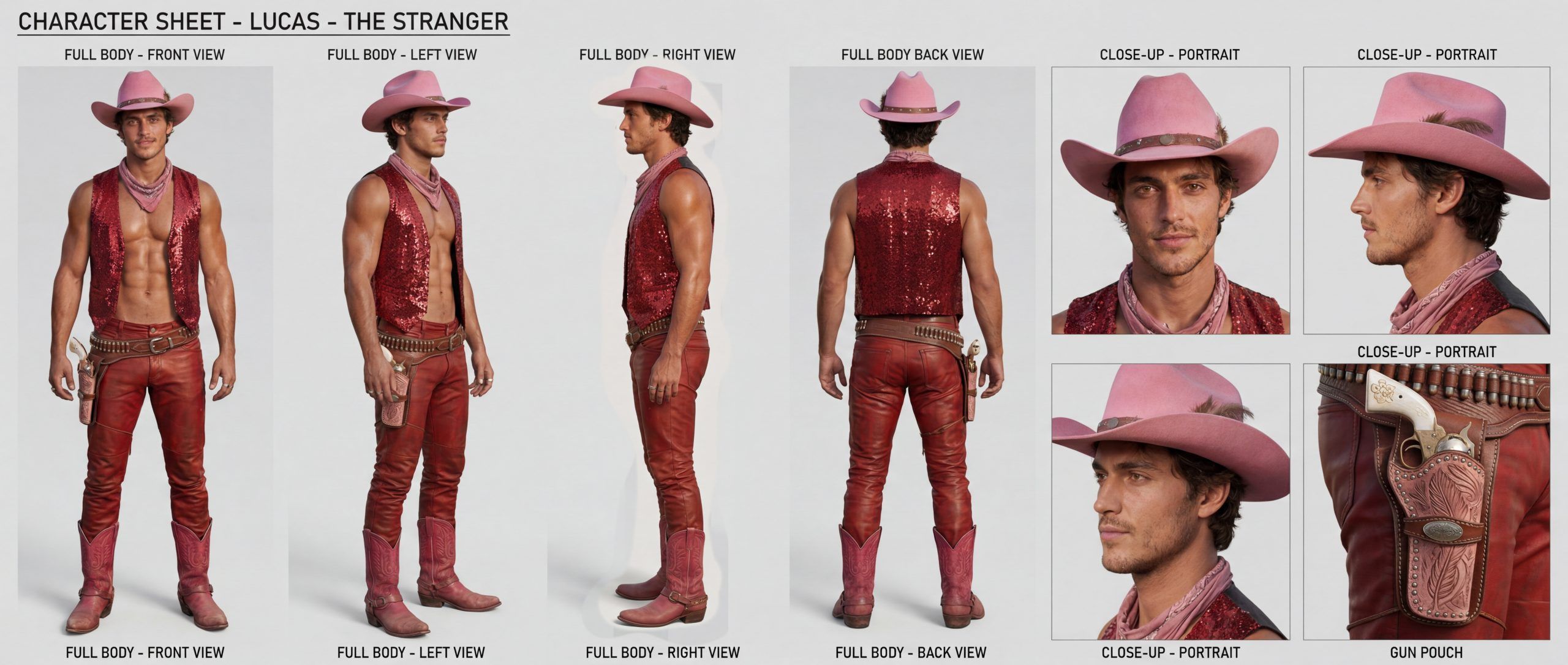
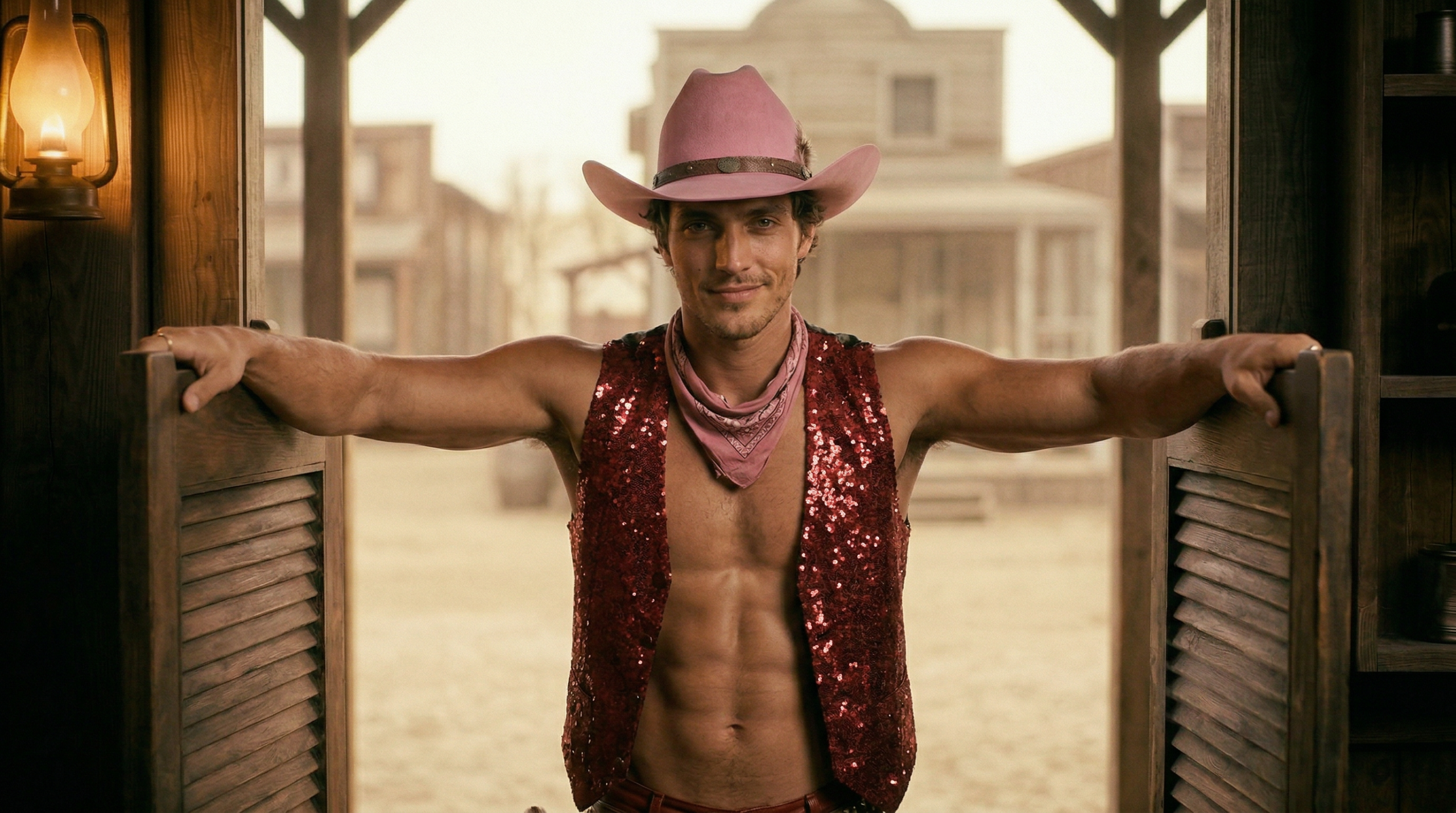
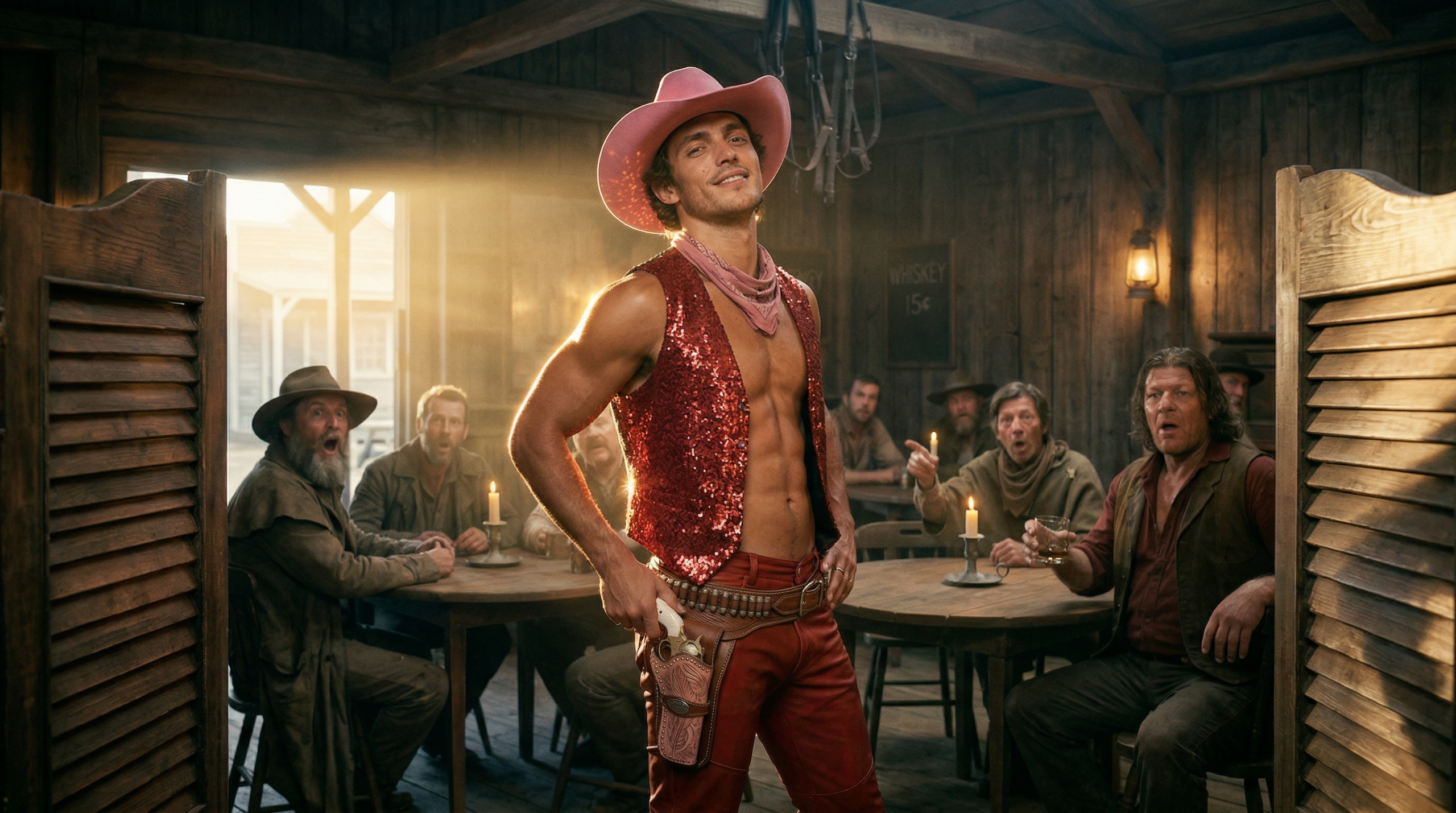
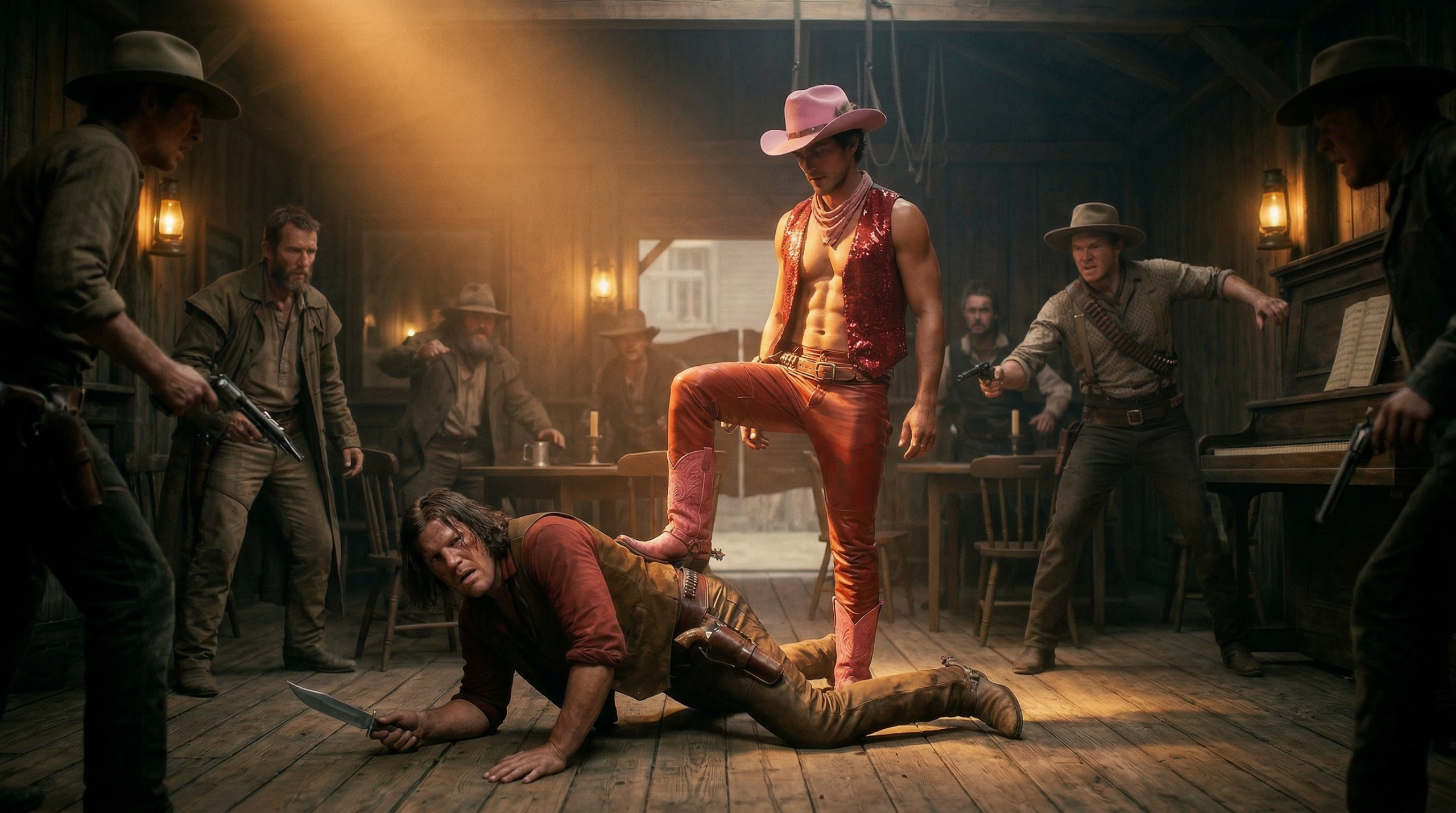
And then Lucas — our stranger — had to break that visual world open. 
He could not simply look handsome. He had to look like an event.


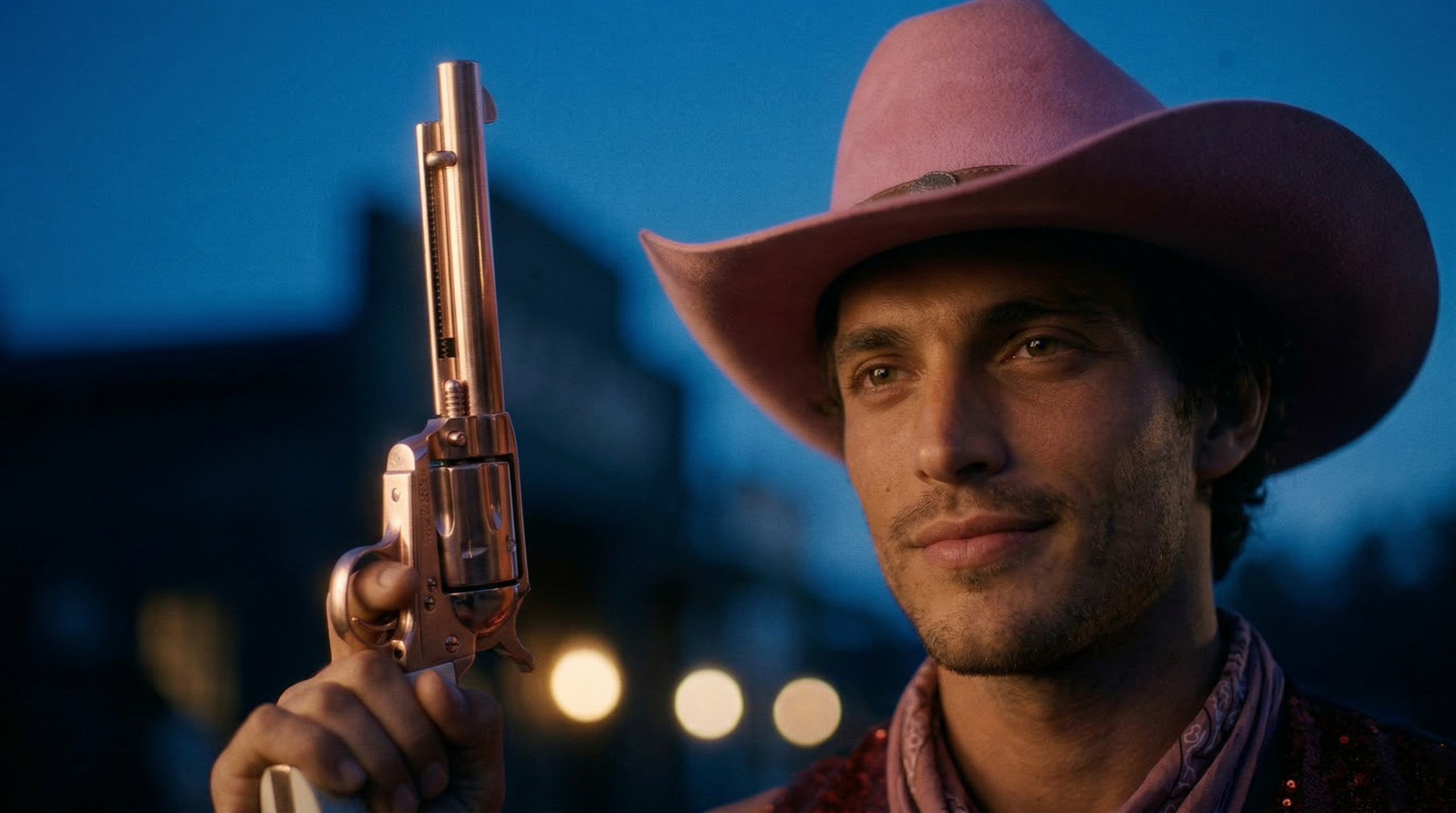
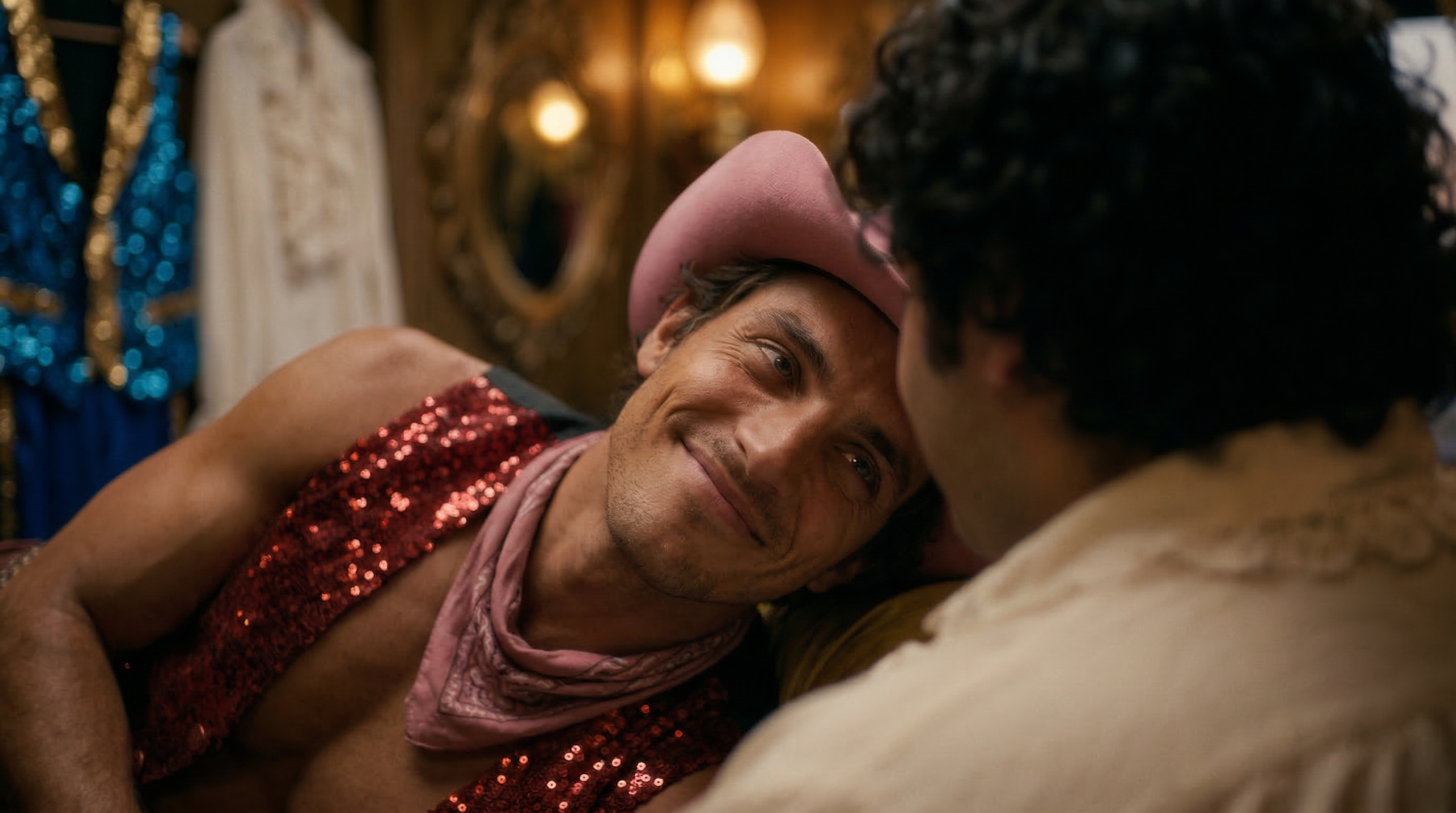
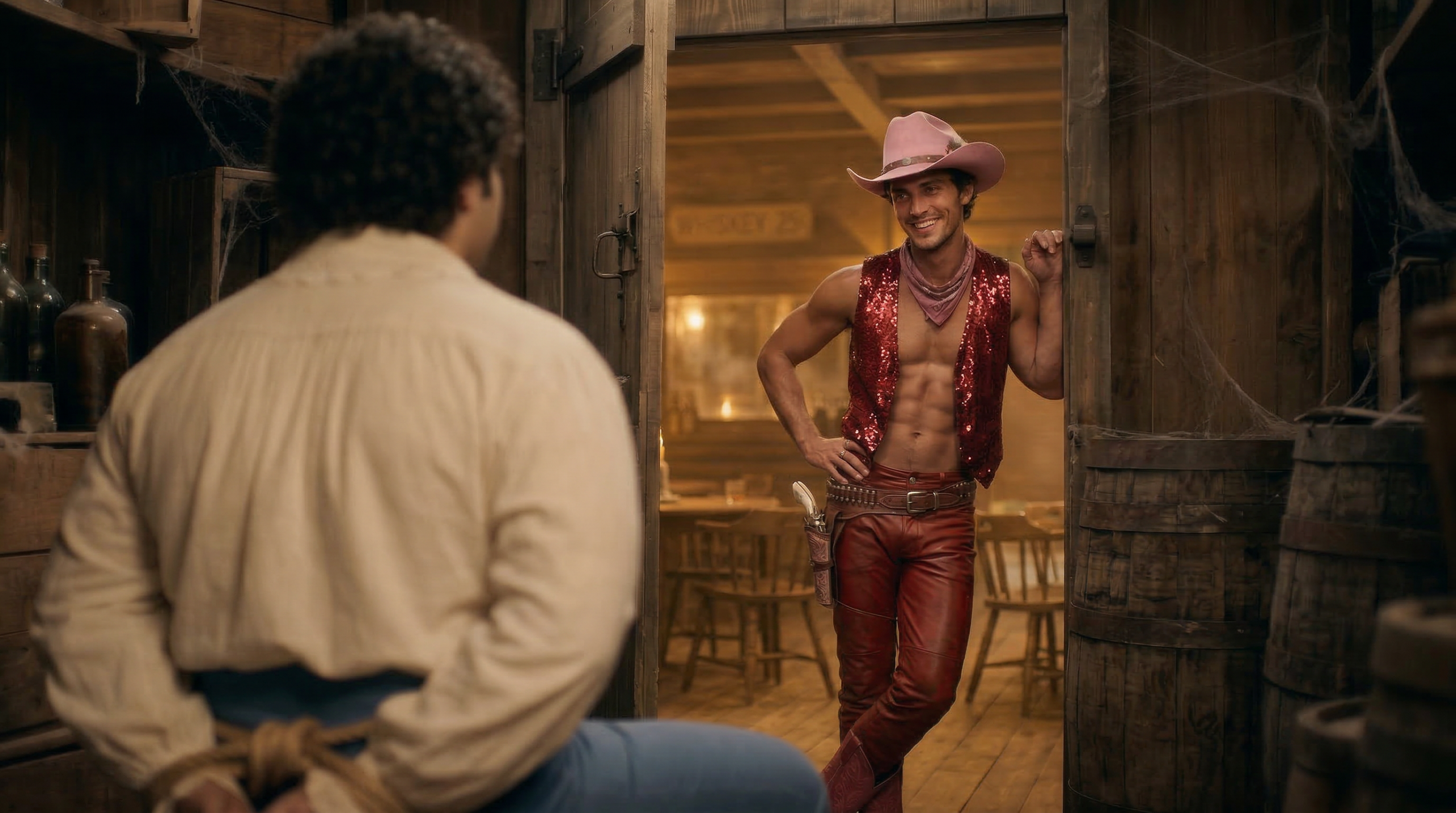
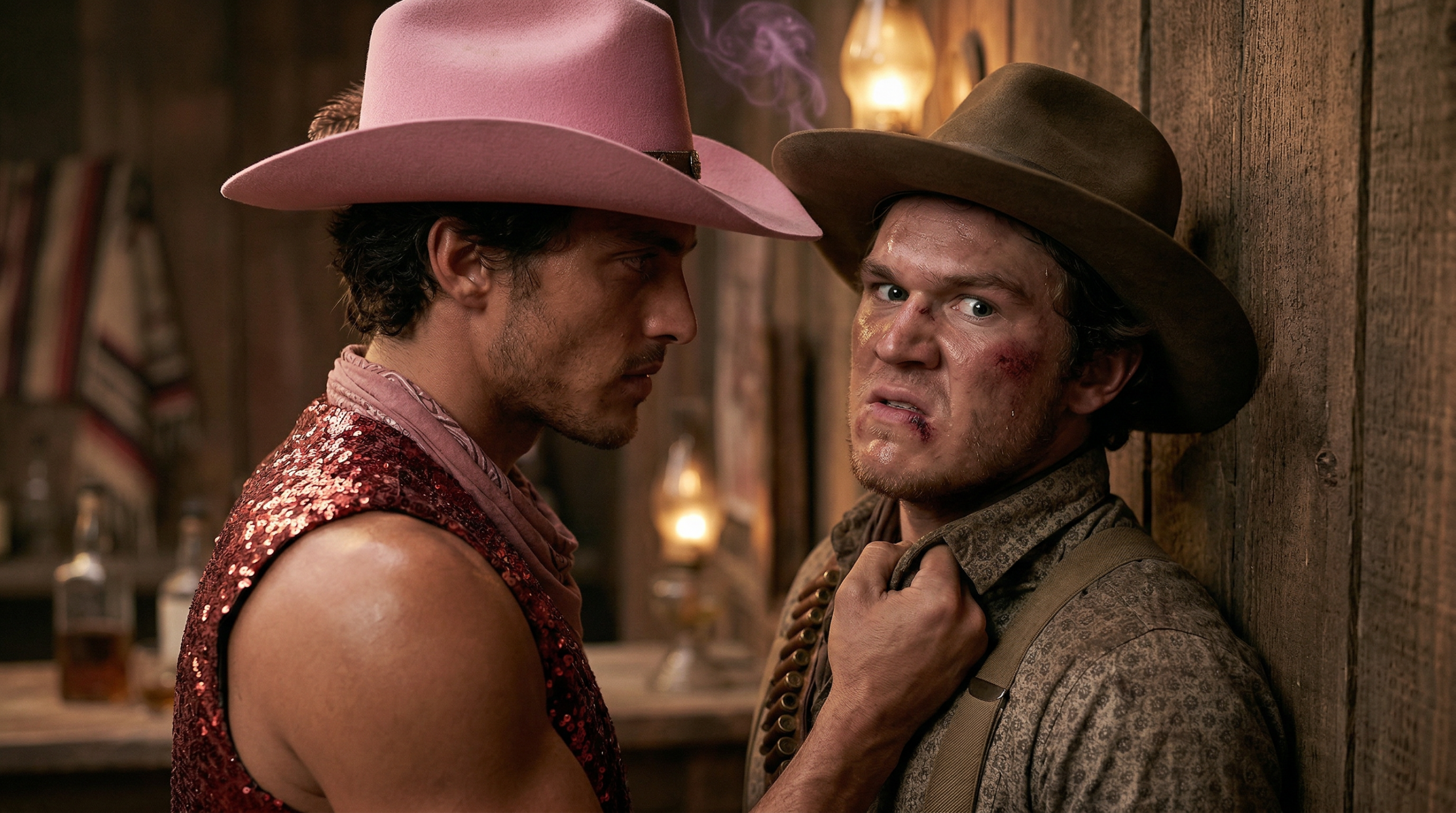
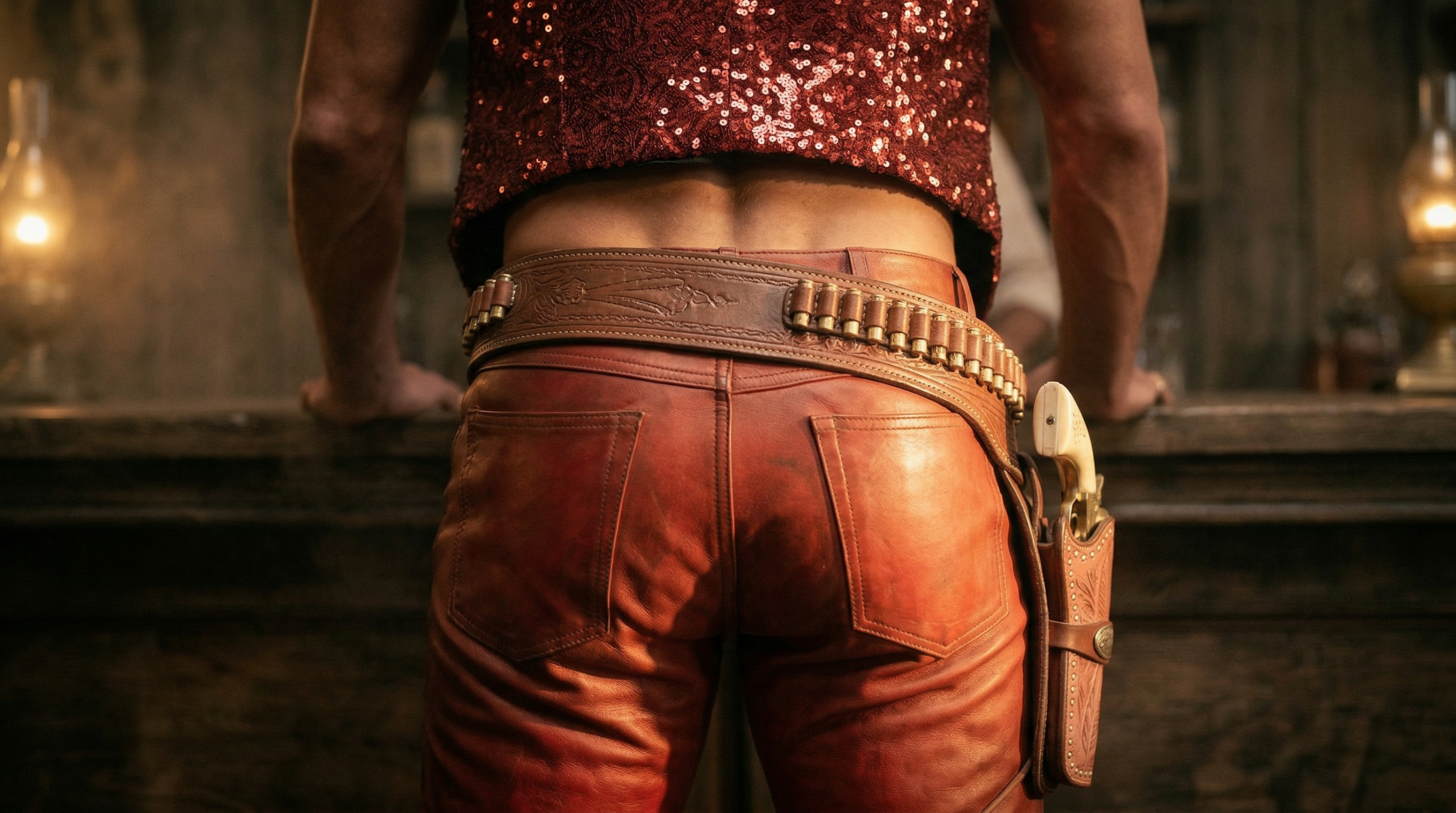
That is why his design became so important: the hat, the color, the exposed torso, the glittering vest, the confidence, the theatricality. He had to feel both absurdly fabulous and entirely in control of the frame.


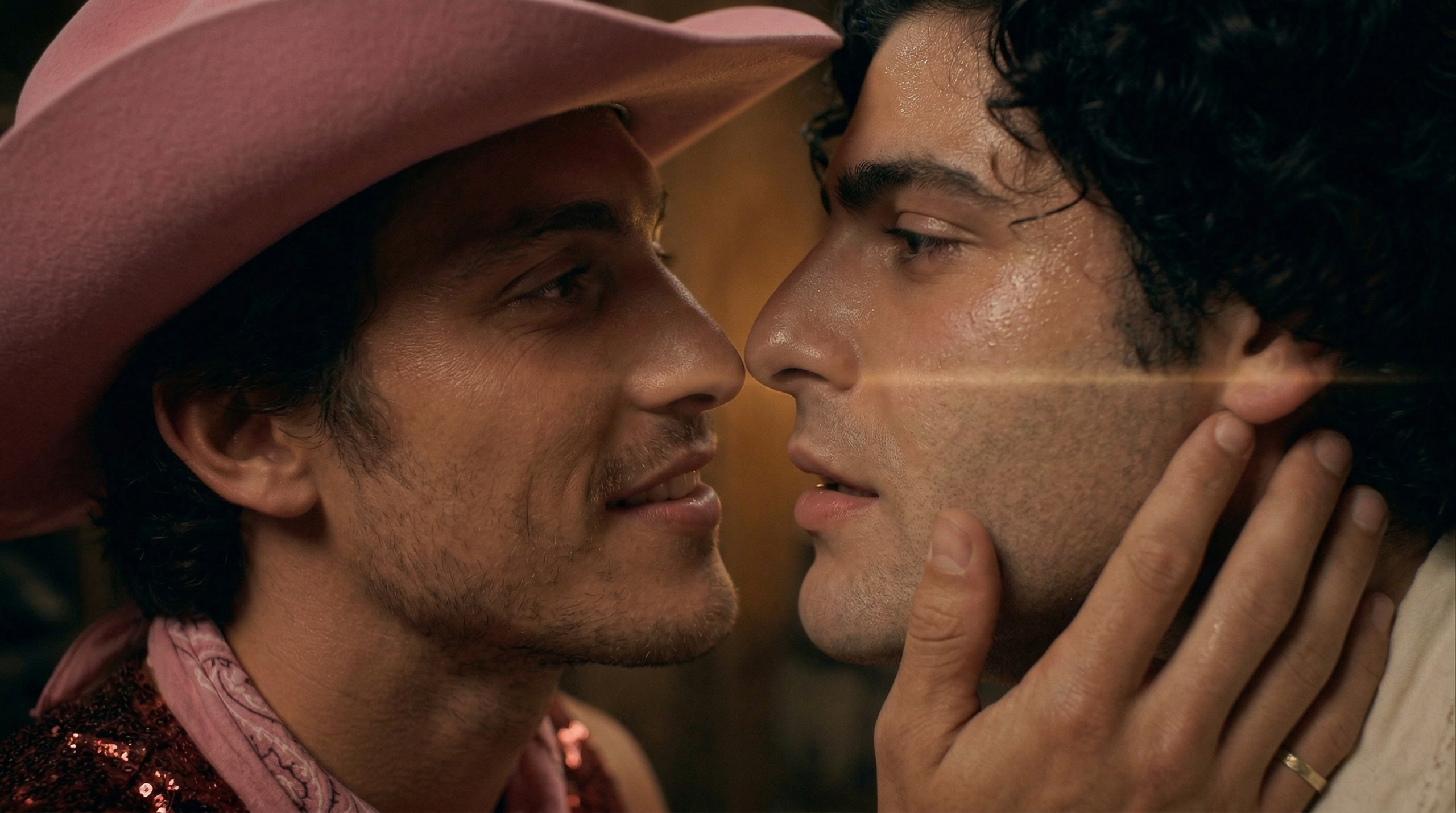
That contrast was essential. If the saloon is a room built on old masculine codes, Lucas is the disruption that makes those codes suddenly look fragile.
Lucas - The Stranger -
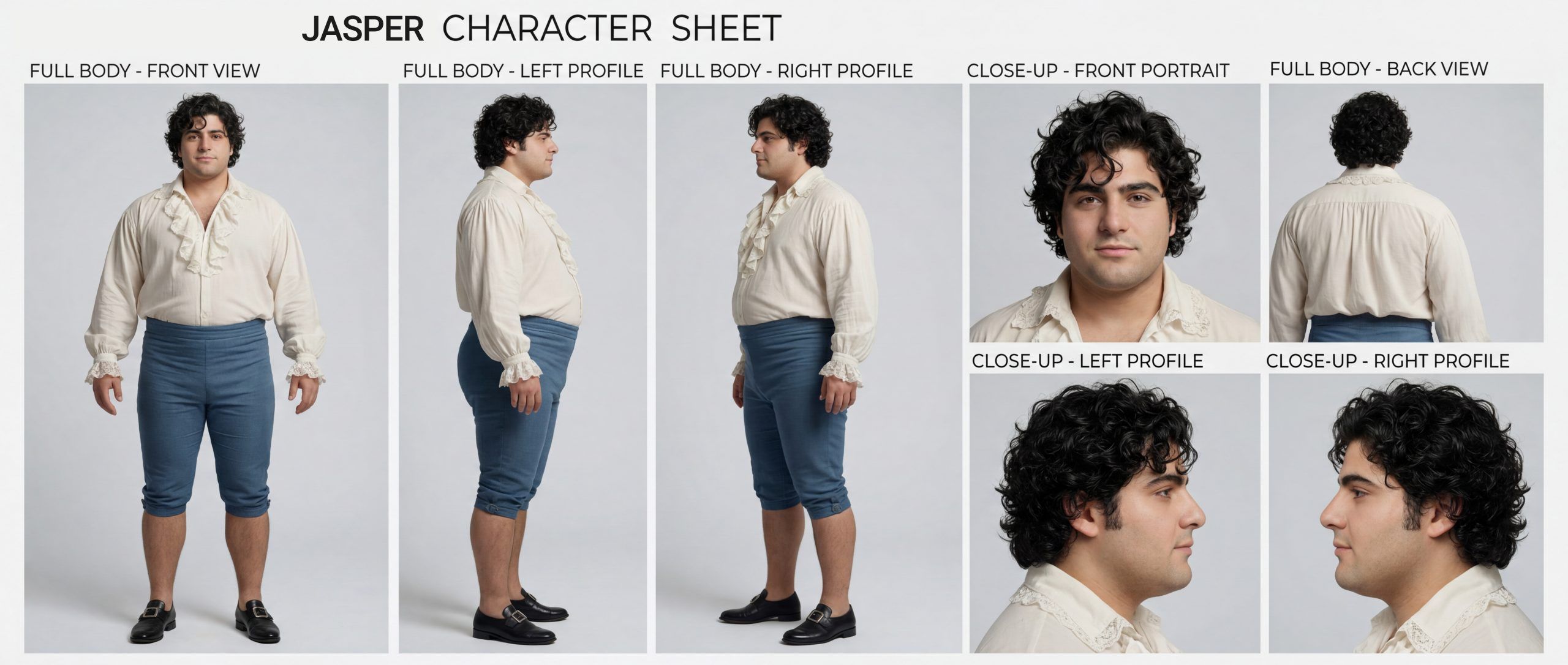
Character reference sheets used to define silhouette, wardrobe, facial structure, consistency, and dramatic function inside the world of DRESSPERADO.

Lucas: the stranger as disruption

Lucas was always meant to be more than a protagonist.
He had to function like an interruption. A visual shock. A figure whose presence changes the room before he even speaks.
 
In classic westerns, power is often coded through restraint, dust, leather, grit, and emotional hardness. With Lucas, we wanted to preserve the mythic power of that entrance while completely changing the visual language.
 
Pink instead of brown. Sequins instead of rough cloth. Glamour instead of stoicism. Seduction instead of suppression.

But the key was that none of it could feel weak or apologetic.

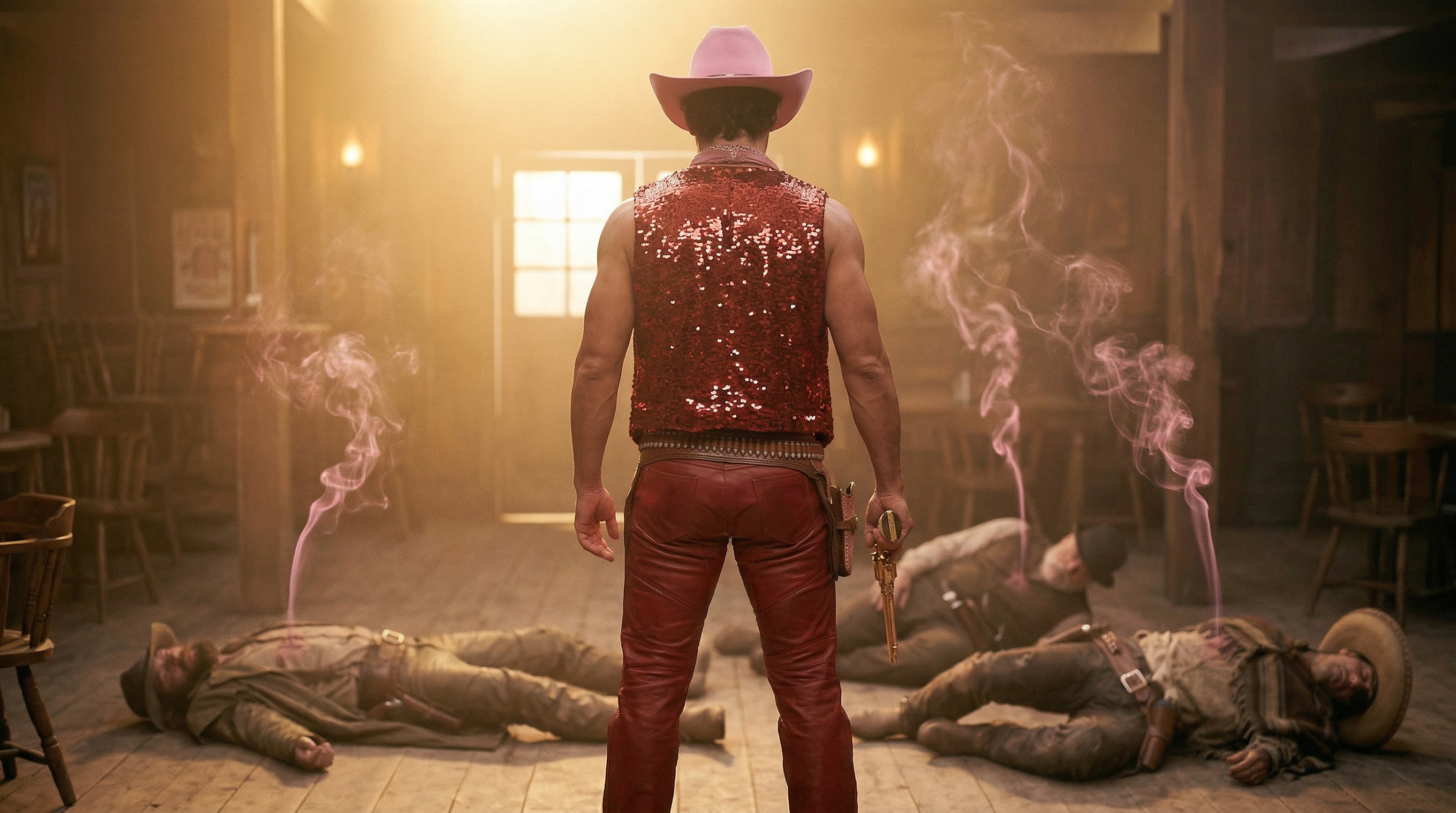
Lucas had to feel powerful, composed, dangerous, and cinematic.


Not a joke inside the western — but a force strong enough to take over the western.

Building the world of the saloon

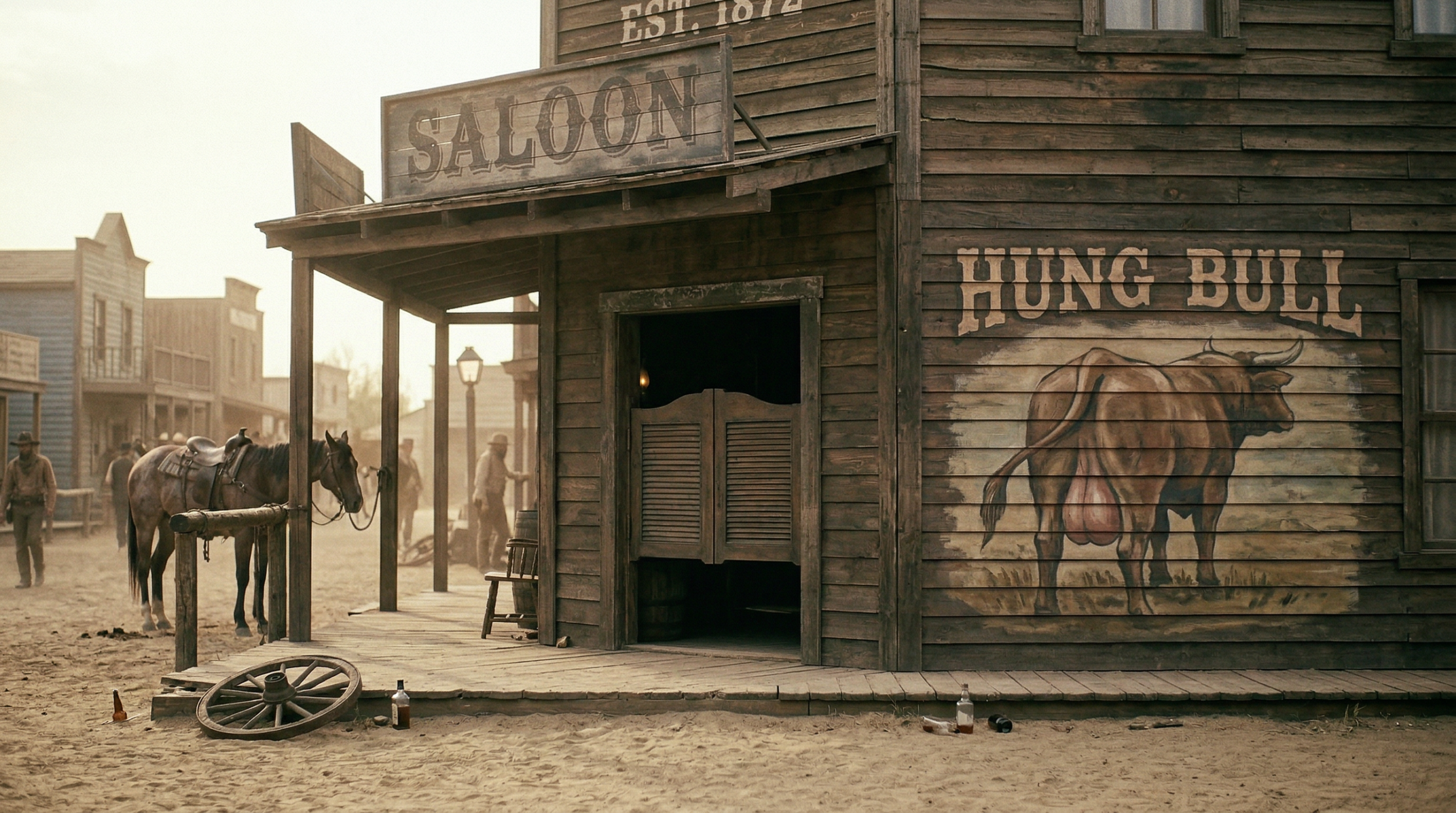
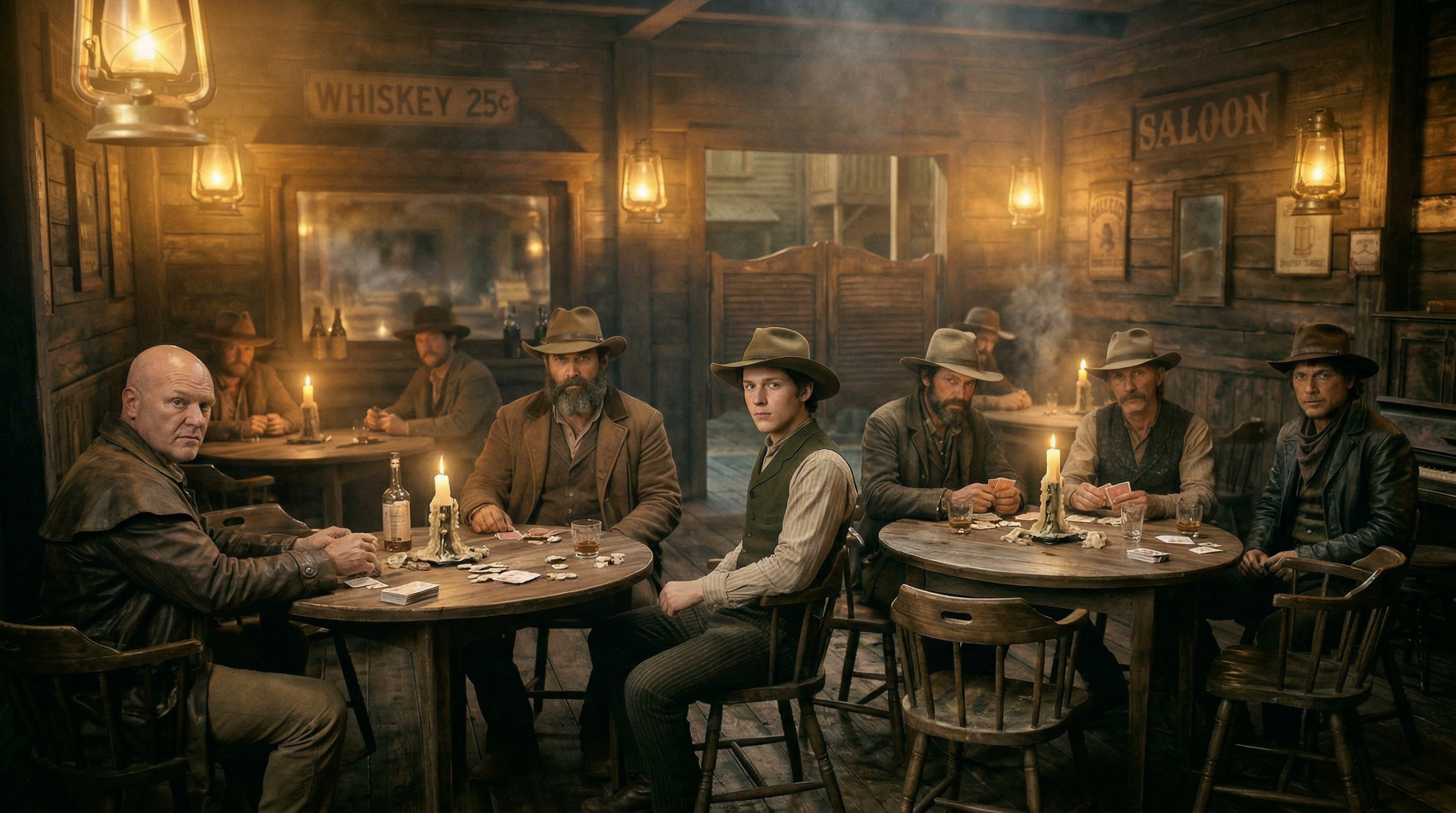
The saloon was one of the most important parts of the whole project, because it is not just a backdrop. It is the engine of the scene.


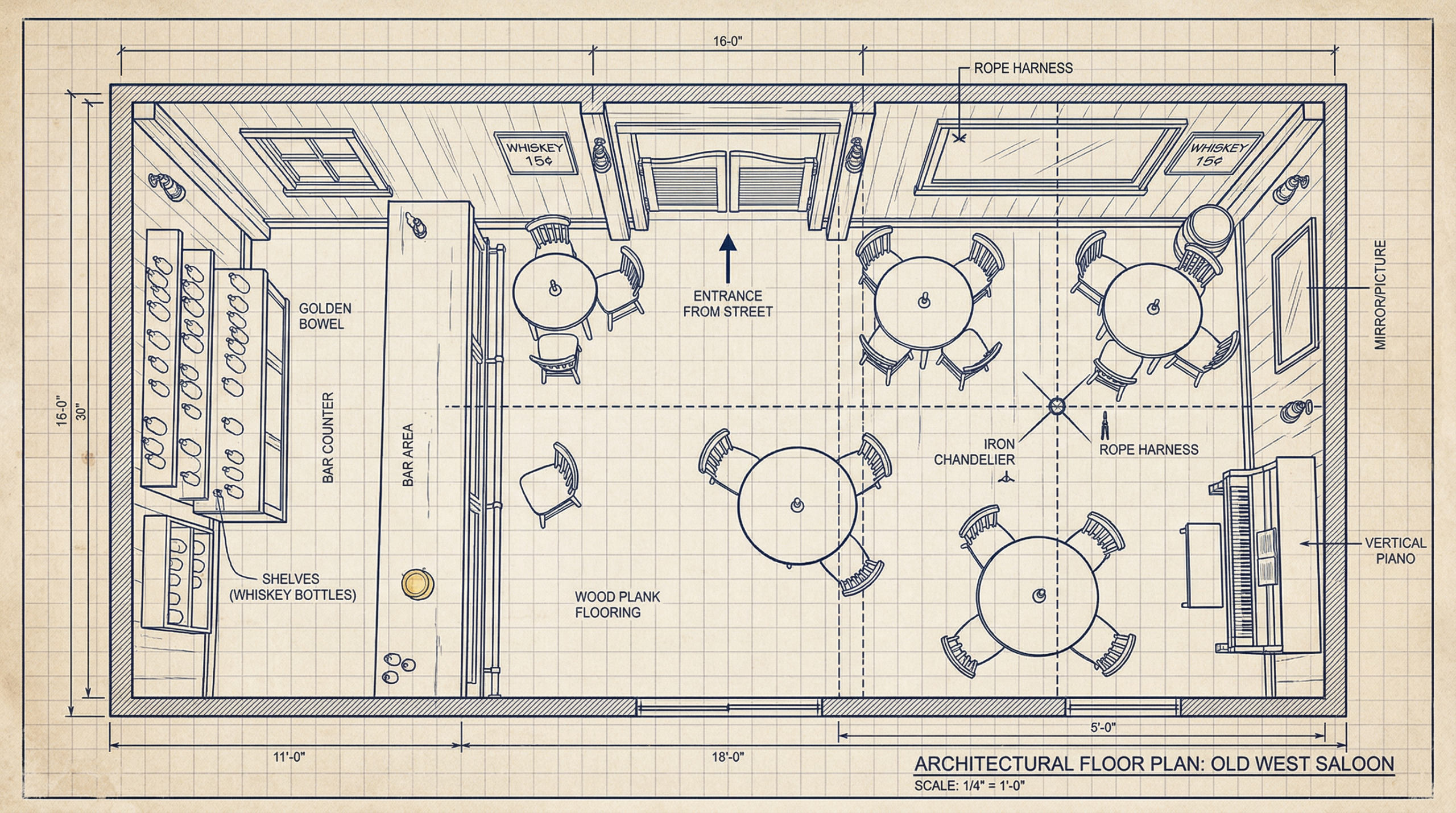
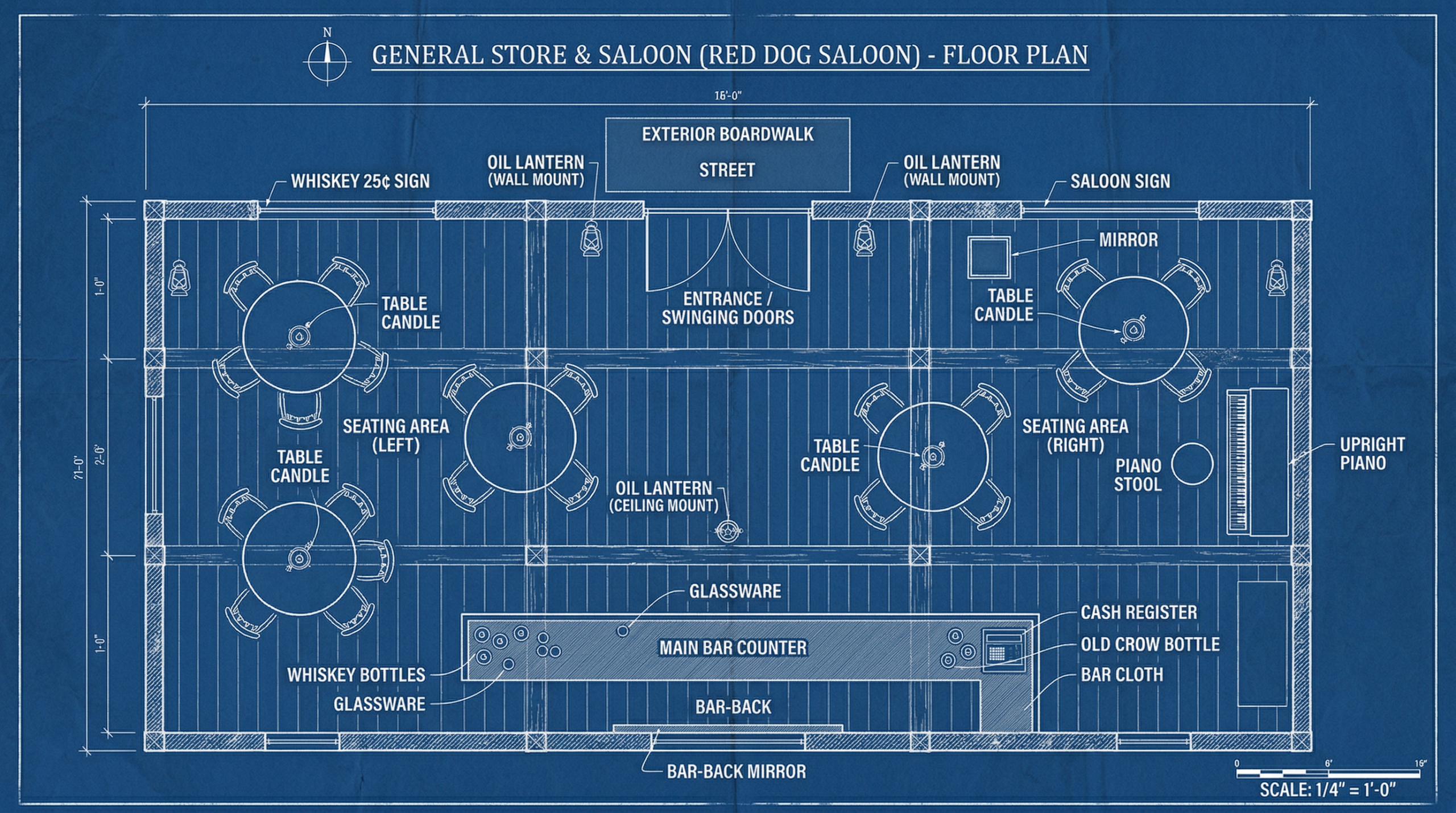
We developed floor plans, spatial references, and multiple visual studies to define how the room should function: where the entrance sits, where the bar is located, how the tables are arranged, where the piano stands, how the characters occupy the space, and how a camera would move through it.
That planning mattered because a sequence like this depends heavily on geography.


Even when the tone is heightened, the audience still needs to understand where people are sitting, who can see what, how the stranger enters, and how tension travels through the room.
So the location process was not just aesthetic. It was cinematic.


We were designing a room for storytelling.

From blueprint to atmosphere

Once the structure of the room was clear, we moved into visual development.

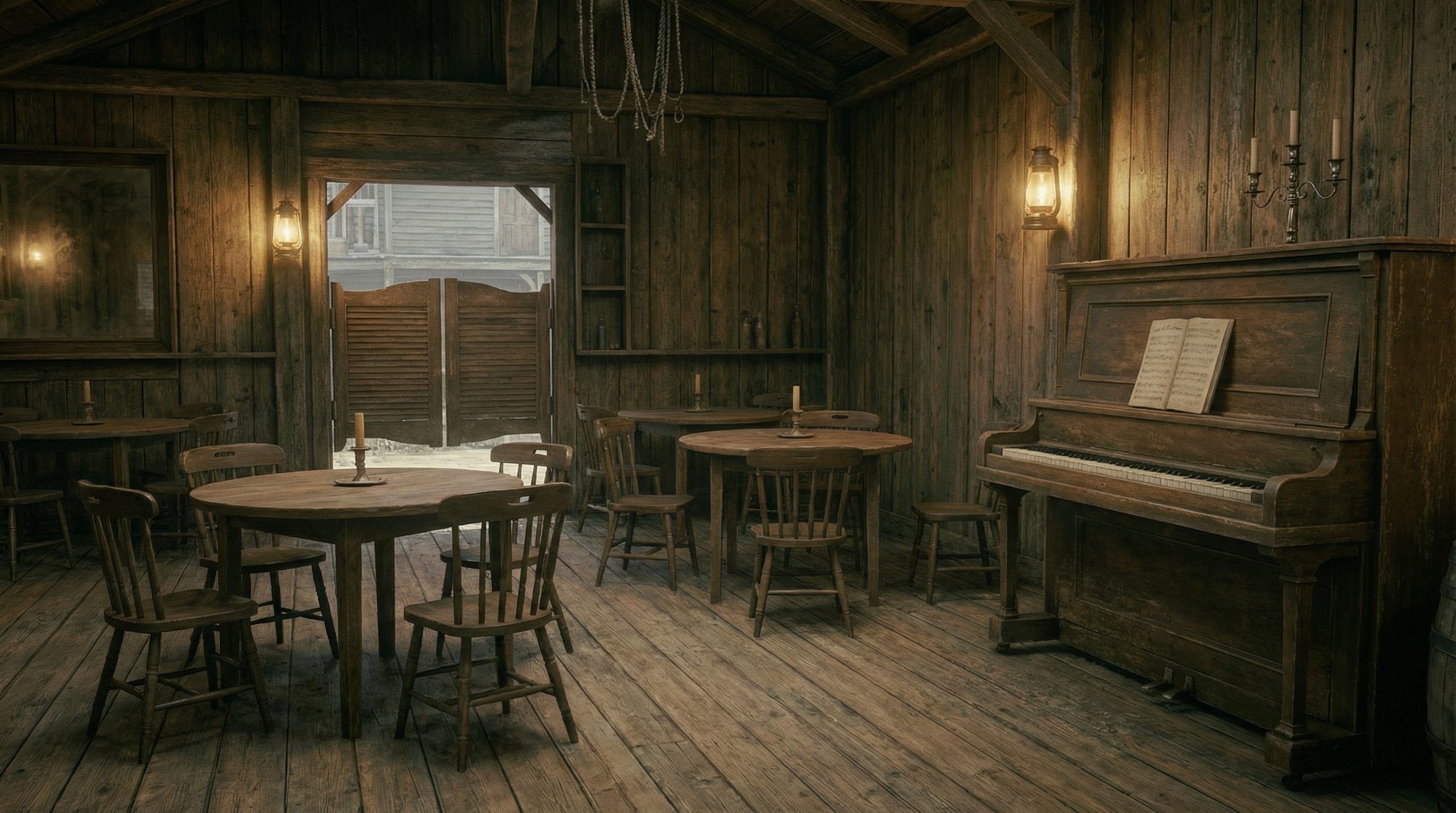
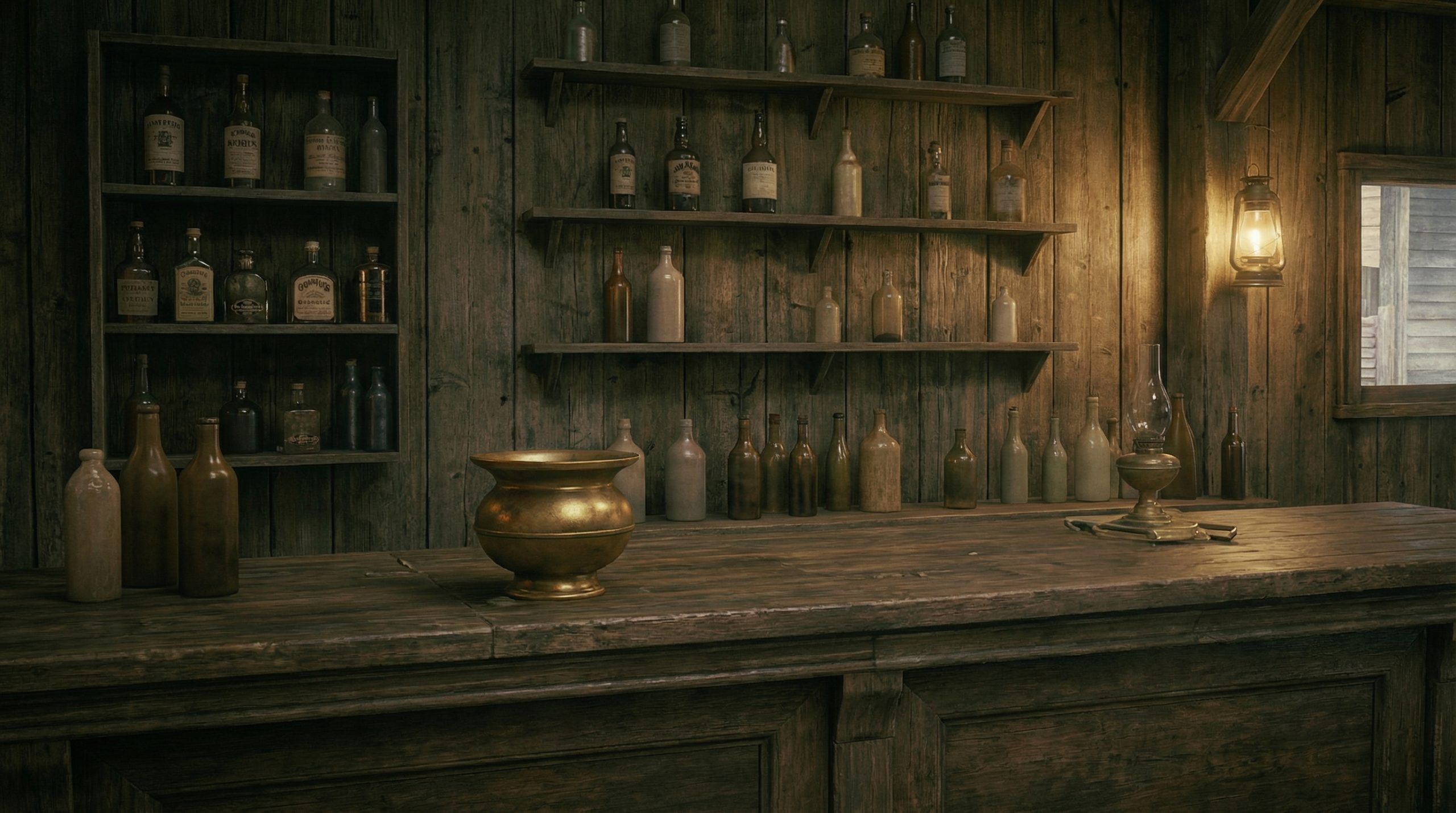
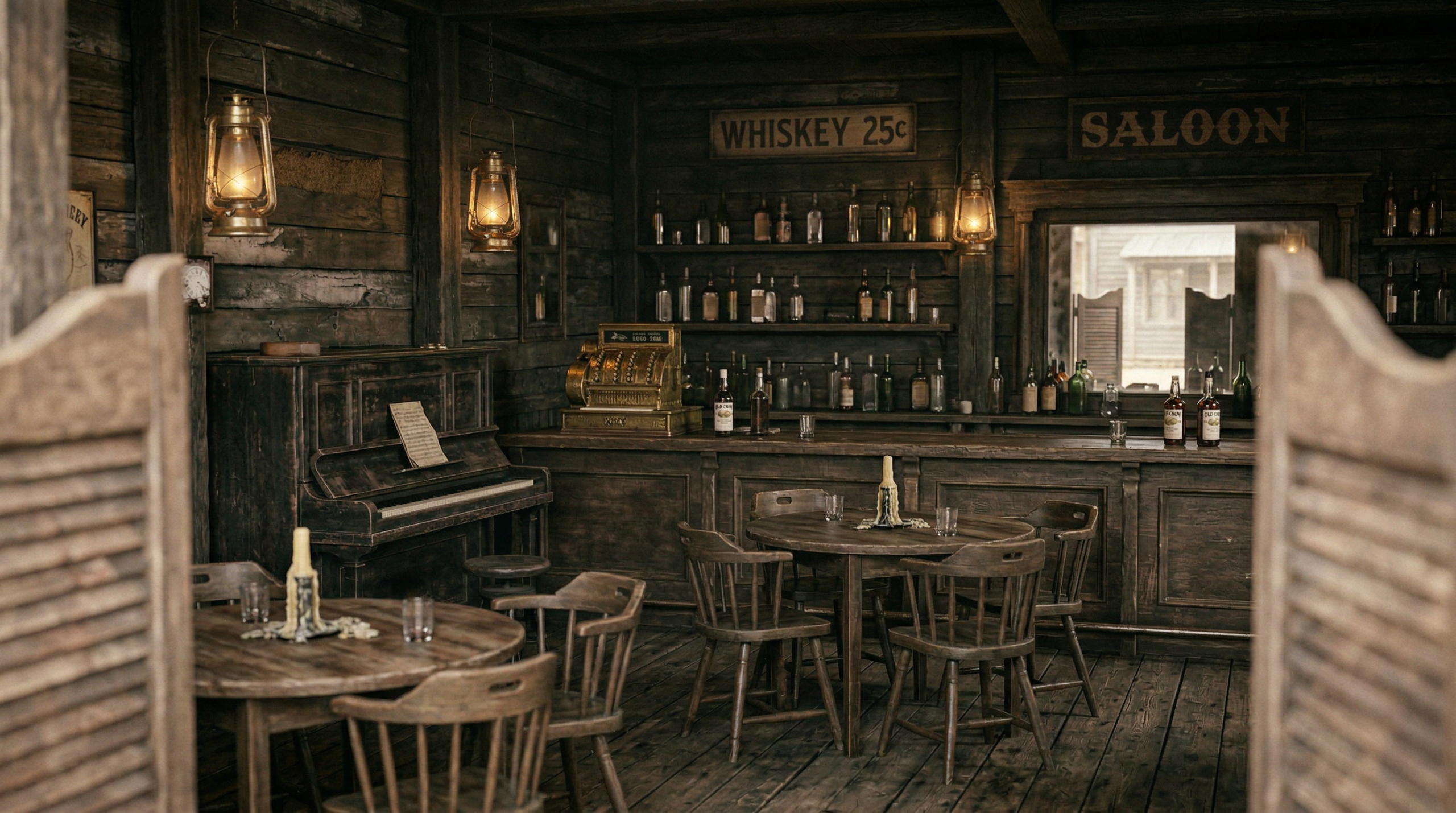
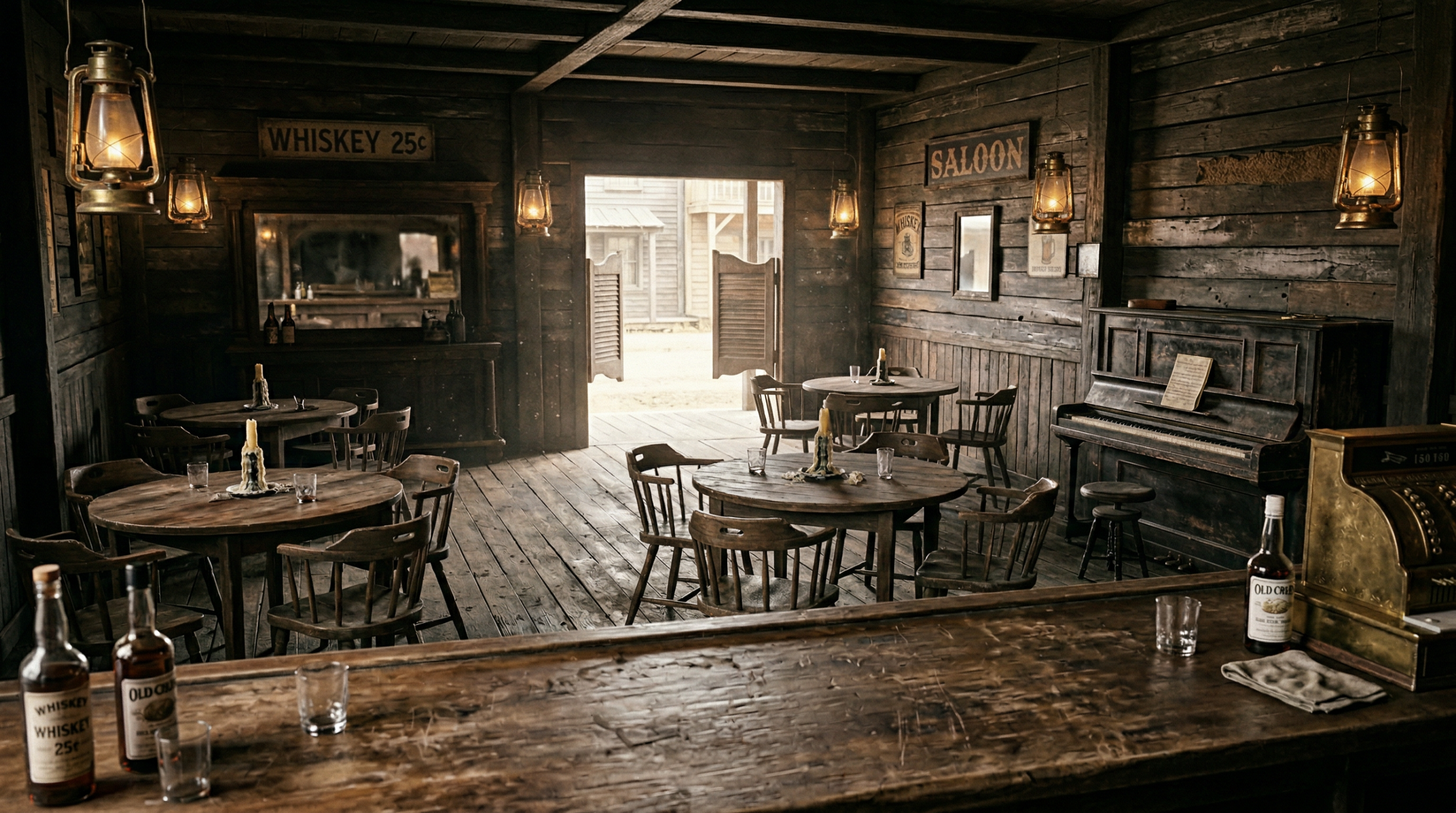
We created empty environment passes, angle studies, and mood explorations to understand how the saloon should feel before it was populated with people.

The room needed to feel believable as a western location, but also cinematic enough to support a heightened, theatrical sequence.

That meant thinking carefully about wood textures, lantern light, haze, table spacing, door placement, bar depth, and how warm light would play against the dust and darkness of the room.

The saloon had to feel lived in, but also stage-ready.

The AI workflow behind DRESSPERADO

A project like DRESSPERADO is not made with a single tool. It is built through a chain of tools, each one handling a different part of the process.

For this film, that meant base image creation, shot development, video generation, voice work, sound design, and soundtrack creation all moving together as part of one pipeline.

This is the part we will probably expand on later in a more technical way, because there is a lot more to say about prompting, references, consistency, and model behavior.

But at a high level, this was the workflow that shaped the film.

Building the base images

For the still-image stage, we relied heavily on Nano Banana 2.


It became one of our main tools for creating the base images for the different clips, especially when we needed clean, strong visual foundations to build from.


At the same time, on more complex multi-character takes, we often had to go back to Nano Banana Pro.


That was an important part of the workflow. While Nano Banana 2 gave us a lot of value, we found that when a shot involved too many characters or too many reference constraints, it could still introduce inconsistencies. In those situations, Nano Banana Pro often behaved more reliably for our needs.


So rather than using one model rigidly, we moved between them depending on what the shot required.
It's like a target with legs

Video generation and performance

For the video stage, Kling 3.0 became the backbone of the project.


This is the model we used most heavily for DRESSPERADO, and it is the one we feel strongest about moving forward. The quality of the acting, the physics, the motion, and the overall sense of performance gave us a level of control and cinematic confidence that we do not want to step away from now.


We have invested heavily in being able to use Kling 3.0 extensively from this point on, because for us it marked a real jump in what AI video performance can feel like.


A small number of shots also involved Seedance 1.5 Pro, and a very small number relied on older-generation tools like Kling 2.6 or Hailuo 2.3 when needed.


But the emotional and visual center of the project, in terms of motion, came from Kling 3.0.


That is the model that gave DRESSPERADO much of its performance quality.
Oh! Shut up darling...

Voices, dialogue, and sound

For voices, we currently use two main platforms: Hume AI and ElevenLabs.


For a long time, Hume AI was a major reference point for our dialogue work. But as ElevenLabs has evolved, it has become our main source for voice acting on projects like this.


What made the difference for us was emotional quality.


At this point, ElevenLabs gives us a level of emotional nuance that has made it our primary voice platform. That shift has been especially noticeable in dialogue-heavy scenes where tone, inflection, and dramatic intention matter as much as the words themselves.


We also relied heavily on the ElevenLabs Voice Changer workflow, especially in cases where a generated video clip contained voice output that did not fully match the voice identity we wanted. That gave us another layer of control and helped unify performance across the film.


For sound effects, we also used ElevenLabs in part, but lately we have been increasingly happy with mirelo.ai, especially for clip-based sound generation. Its ability to analyze content and build effects around what is happening inside the shot has been very useful for speeding up parts of the audio workflow.


Like everything else in this process, it is not about one perfect tool. It is about building the right chain.

Music and soundtrack

The soundtrack for DRESSPERADO was created with producer.ai.


It has been our main music creation tool for around a year, and it remains our favorite music generator overall. It has played a major role in the way we have been able to build original soundtracks for our projects.


At the same time, our experience with it has also included some frustration. After changes to the platform, we felt it was no longer offering the same level of quality and length we had become used to in earlier stages of our workflow.


We are hopeful that this will improve, because it is still the platform we feel most attached to when it comes to music generation.


For now, it remains a key part of the sound identity of DRESSPERADO.
Thinking like filmmakers, not just image generators
A big part of the process involved creating not just final shots, but production-style reference materials that helped us think more like filmmakers.

That included character sheets, wardrobe studies, front and side profiles, saloon plans, multi-angle environment grids, empty location passes, occupied room staging versions, and storyboard pages tied directly to timing and shot function.

These materials helped us test continuity, composition, spatial logic, and dramatic clarity before moving toward final visual choices.

That was one of the most useful parts of the whole process.

Because in AI filmmaking, the real work is often not just generating images. It is building consistency, rejecting what does not belong, refining what almost works, and slowly forcing everything into the same world.

Why this matters to us

What excites us most is not any one tool in isolation.

It is the fact that the workflow is becoming more integrated.

Storyboard planning, timeline structure, image generation, clip generation, voice performance, sound design, and music are now feeding each other more smoothly than they did before. That is one of the reasons projects like DRESSPERADO can move faster while also becoming more ambitious.

The process is still demanding. It still requires taste, iteration, correction, and a lot of trial and error.

But every time the workflow becomes more coherent, it gives us more freedom to focus on the part that matters most:

the filmmaking.

Why the process matters

We love seeing behind-the-scenes materials on films.


Not just polished final frames, but the planning, the trial and error, the visual development, the alternate directions, and even the bad takes that reveal how a project was actually built.


That is why we want to share the making of DRESSPERADO openly.


The finished short is only one part of the story.


The process is a story too.

More than parody

Even though DRESSPERADO is playful, exaggerated, and knowingly theatrical, the creative intention behind it was serious.


We wanted to celebrate cinema.


We wanted to test ourselves.


And we wanted to open up a genre that has so often left queer desire outside the frame.


There is something deeply satisfying about taking one of the most macho visual languages in film history — dusty saloons, guns, cards, boots, whiskey, legends whispered by men trying to look dangerous — and letting queerness walk right through the front doors, dressed in pink, and take over the story.


That, in many ways, is what DRESSPERADO is.


    • An homage.
    • A filmmaking exercise.
    • A queer intervention.
    • And above all, a love letter to myth, style, and cinematic storytelling.